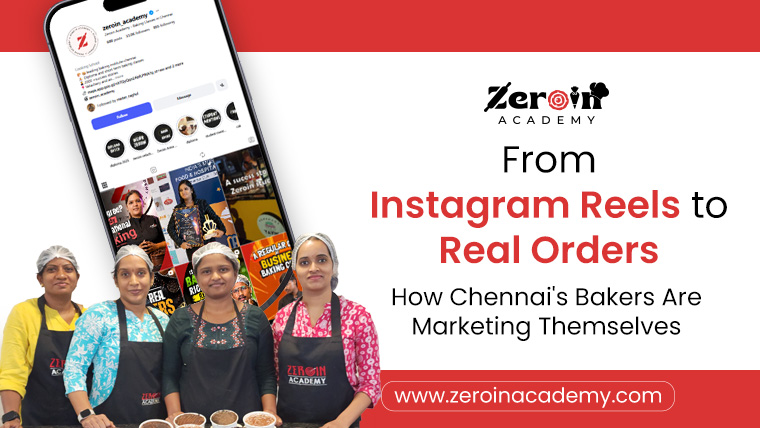
Scroll through Instagram for five minutes and you’ll probably land on one: a hand cutting into a burnt basque cheesecake, caramel dripping in slow motion, a caption that says “link in bio.” A few years ago, that same baker might have been standing at a stall hoping someone walking by would notice the display. Now the display comes to the customer, one reel at a time. This shift hasn’t just changed how Chennai’s home bakers and small bakery owners get noticed, it’s changed what it actually takes to survive in the business, and it’s exactly why so many students walking into baking classes in Chennai today ask about marketing just as often as they ask about lamination technique.
This isn’t a small trend confined to a handful of influencer-bakers either. Across the city, people running everything from single-kitchen home setups to small storefronts are treating social media less like an afterthought and more like the actual sales counter.
Why a Reel Works Harder Than a Menu Card
A printed menu tells someone what’s available. A reel shows them what it’s like to eat it, the crack of a crust, the pull of melted cheese, the exact moment a knife slides through a ganache layer. That difference matters more than most new bakers expect when they’re starting out.
A few reasons short-form video has become the default marketing tool for bakers here:
- Texture and motion sell a bake far better than a still photo ever could
- Reels reach people who’ve never heard of the brand, not just existing followers
- A single well-timed video can outperform months of static posting
- Viewers can literally watch the product being made, which builds trust before a single order is placed
None of this means photography is dead. It still matters for menus, price lists, and catalog-style browsing. It just isn’t the thing pulling in new customers the way it used to.
The Bakers Actually Getting Orders Aren’t Just Posting, They’re Being Consistent
Plenty of talented bakers post one incredible reel, get a wave of likes, and then disappear for three weeks. That’s usually where the momentum dies. The bakers converting views into actual orders tend to treat content the way they treat their ovens, on a schedule, not on a whim.
What separates a business-building page from a hobby page:
- Posting on a predictable rhythm, even two or three times a week, rather than in unpredictable bursts
- Replying to comments and DMs quickly, since a slow response often means a lost order
- Showing the process, not just the finished product, cracked eggs, dusted flour, the mess before the polish
- Pinning pricing, order timelines, and delivery details somewhere easy to find instead of burying them in captions
Customers rarely place a first order from a single video. They usually follow for a while, watch a few more posts, and then order once trust has quietly built up in the background.
Where Training Actually Shows Up on Camera
Here’s something that surprises a lot of new bakers, technique shows on video in a way it never did on a plate handed across a counter. A shaky lamination, an uneven crumb, a cake that slightly collapses at the edges, all of it is far more visible in a slow-motion cut than it ever was in person. This is exactly where structured training separates a page that looks amateurish from one that looks like an actual business.
A proper baking courses curriculum doesn’t just teach recipes, it teaches consistency, the kind that holds up under a camera zoomed in at half speed. Institutes like Zeroin Academy, which train students in both classic technique and contemporary presentation, are increasingly where that camera-ready consistency actually gets built. Bakers who’ve trained properly tend to produce content that looks effortless, because the technique underneath actually is solid, not because of clever editing.
Turning Views Into Actual Revenue
Views and likes feel good, but they don’t pay rent. The bakers doing well have figured out how to move a viewer from “that looks nice” to “let me place an order” without much friction in between.
A few practical habits that make that jump easier:
- A clear, simple ordering process linked directly in the bio, not buried three clicks deep
- Highlighting reviews and repeat customers, since social proof does a lot of quiet convincing
- Running small, time-limited offers tied to a festival or weekend, which nudges hesitant viewers into acting
- Collaborating with other local creators or small businesses to borrow each other’s audiences
Marketing skill matters here, but it’s still standing on top of the baking itself. No amount of clever content saves a product that doesn’t taste as good as it looks.
The Bigger Picture for Chennai’s Baking Scene
What’s happening right now isn’t really about chasing trends or learning video editing tricks. It’s about bakers realizing that the kitchen and the camera are now part of the same job. The ones building real, sustainable businesses are the ones pairing solid technique with consistent, well-made content, not the ones with the flashiest editing and the weakest bakes.
For anyone in Chennai serious about building both sides of that equation properly, structured, hands-on training paired with real practice is still what makes the difference between a page that looks good and a business that actually runs. Baking classes in Anna Nagar offer exactly that kind of grounding, where the fundamentals get built first, so that whatever ends up on camera later has something solid behind it.
Why do reels work better than photos for bakers?
They show texture and motion, which sell a bake more convincingly than a still image.
How often should a baker post to see real results?
Two to three times a week tends to work better than sporadic bursts.
Does training actually show up on camera?
Yes, techniques like lamination or crumb texture are often more visible on video.
What’s the biggest mistake new baker-influencers make?
Posting inconsistently and losing the momentum they build with one good reel.
Do views actually turn into orders?
Only with a clear ordering process and consistent, trustworthy content over time.