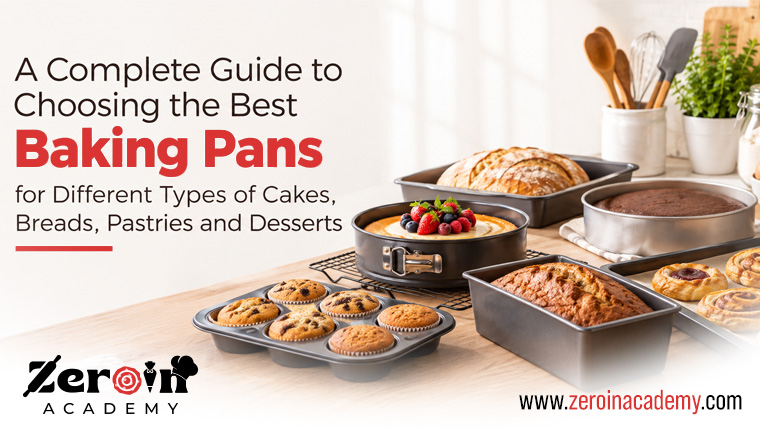
A baker follows a trusted sponge recipe to the letter, but the cake comes out with dark edges and a pale, sunken centre. The batter was fine and the oven was hot enough. The problem was the pan, thin and shiny, a size smaller than the recipe assumed. Pans shape heat flow, rise, colour and release, and a wrong choice quietly undoes careful work.
This guide covers how materials behave, which shapes suit cakes, breads, pastries and desserts, how to handle sizing and conversions, coatings and care, and a basic starter set. Anyone exploring baking classes in Chennai will find it useful for building a kitchen that works.
How Pan Material Changes the Bake
Metals conduct heat differently, and that affects crust, colour and cooking time.
Aluminium heats lightly and evenly, which makes it a favourite for cakes and cookies, while anodised aluminium is harder, scratch-resistant and non-reactive with acidic batters. Stainless steel is durable but conducts heat more slowly and less evenly, so it is best used with a thick base. Carbon steel heats quickly and browns well, which is good for breads and tarts, but it needs some care to prevent rust. Cast iron holds heat strongly and is good for cornbread and rustic bakes. Glass and ceramic heat slowly but retain heat, so reduce the oven temperature slightly and watch the edges, and silicone is flexible and easy to release, though it does not brown well and needs support on a tray.
Dark pans absorb more heat and brown faster than light ones. If a recipe browns too quickly in a dark pan, lower the temperature a little or move the rack down. Thickness matters as much as the metal itself.
Pans for Cakes
Cake pans are the most varied group, and the shape changes the baking time. Round pans are the standard for layered and birthday cakes, usually in 6, 8 or 9 inches, while square and rectangular pans suit traybakes, brownies and sheet cakes. Bundt and tube pans cook dense batters evenly through the centre and give decorative shapes. Springform pans have a removable side that suits cheesecakes and delicate cakes, loaf pans work for pound cakes, banana bread and tea cakes, and cupcake and muffin trays handle individual portions, with liners to help release.
Deeper pans need longer, gentler baking. Straight sides give cleaner slices and neater layers than sloped ones. Pan height deserves a quick check too. Layer cake pans should be at least two inches deep, so the batter has room to rise without doming or spilling. For dense cakes such as carrot or fruit cake, line the sides as well as the base. This protects the edges from drying out during the longer bake.
Pans for Breads
Bread needs steady heat and support while the dough rises. Standard loaf pans give sandwich bread its familiar shape and soft sides, and Pullman or lidded pans create square loaves with a tight crumb. Baguette trays have perforated surfaces that let heat reach the crust, while round and oval baskets paired with a baking tray or Dutch oven suit artisan loaves. Muffin and bun trays shape dinner rolls and burger buns.
For crisp crusts, metal pans and preheated trays help. For soft rolls, a snug pan lets the buns rise upward and keeps the sides tender. Dough volume should match the pan. A loaf pan works best when the shaped dough fills roughly half of it before the final rise, leaving space for the bread to climb.
Pans for Pastries and Tarts
Pastry depends on quick, even heat to set the shell and keep the fat from leaking. Tart pans with removable bottoms make it easy to unmould fluted shells, and glass or ceramic pie dishes help the base brown evenly while letting you see the colour. Flat, rimmed baking sheets suit puff pastry, croissants and cookies, perforated or plain trays work for cream puffs and eclairs, and mini tart and muffin moulds are handy for individual desserts.
Light-coloured, heavy-gauge sheets prevent burnt bases. A cold pan and cold dough also give better flake. Chill the lined tart pan for thirty minutes before baking. This firms the fat, keeps the shell from shrinking and gives a cleaner, crisper edge.
Pans for Desserts and Special Bakes
Some desserts need pans built for delicate textures. Springform pans are ideal for cheesecakes, which need gentle release, and ramekins suit soufflés, crème brûlée and baked puddings. Baking dishes work for cobblers, crumbles and bread pudding, while silicone moulds are useful for entremets, mousse cakes and shaped desserts. A larger water-bath tray lets you bake custards in gentle, steady heat.
Match the pan to the texture. Custards like gentle, indirect heat, while crumbles do well in shallow ceramic dishes. Wrap springform pans in foil before a water bath, so no moisture seeps through the seams and softens the base of the cheesecake.
Sizing, Conversions and Greasing
A recipe is built around a specific pan size, and a mismatch changes timing and texture. Measure pans across the inside top edge, not the outer rim. A larger pan makes a thinner cake that bakes faster, while a smaller pan makes a taller cake that needs longer and may overflow, so fill pans about two-thirds full to allow for rise. Grease, line with parchment and dust with flour for tricky cakes, and use cake release paste or butter and flour for intricate moulds.
Care, Coatings and Building a Starter Set
Good pans last for years with sensible handling. Avoid metal tools on non-stick surfaces, hand wash where possible and dry fully before storing. Do not soak carbon steel and cast iron, replace warped or badly scratched pans, and avoid stacking pans without a cloth between them.
A sensible starter set includes two 8-inch round pans, one square pan, a loaf pan, a 12-cup muffin tray, a springform pan and two flat baking sheets. Add specialist pans only when your bakes call for them.
Building a Kitchen That Works for You
Zeroin Academy has spent close to a decade training home bakers and aspiring professionals through structured, hands-on programmes. Its students learn how equipment, including pans, affects the outcome of every bake.
The best pan is the one that suits the recipe, the oven and the baker. Start with a few reliable basics, learn how they behave and add to the set as your skills grow. If you would like guided practice with an instructor, joining baking classes in Anna Nagar lets you see the difference pans make in real time.
Which pan material is best for beginners?
Light colored anodized or regular aluminum pans are a safe bet as they heat evenly and are less likely to burn the bottoms.
Can I use a glass dish instead of a metal pan?
Yes, but reduce the oven temperature by about 15 to 20 degrees C as glass holds heat longer and can over-brown edges.
What happens if I use the wrong pan size?
A larger pan will give you a thinner, drier bake and a smaller pan will give you a taller bake, which may overflow or have an undercooked center.
Do I need to grease non-stick pans?
Yes, it should be lightly greased. It makes release easier and helps the coating last longer.
How many pans do I need to start baking?
A round pan, square pan, loaf pan, muffin tray and two baking sheets cover most beginner recipes comfortably.