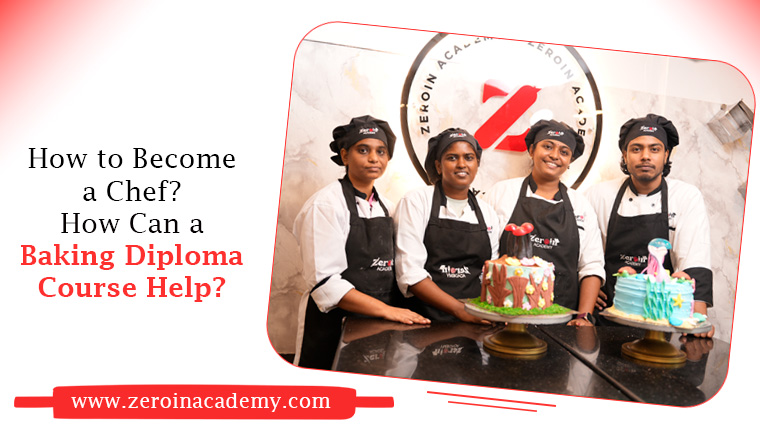
A college student spends most weekends in the kitchen, trying out brownies, then bread, then a three-layer cake for a friend’s birthday. Someone says, “You should do this for a living,” and the idea sticks. But then the questions pile up. Do you need a degree? Where do chefs start? Is baking a different path from cooking? Becoming a chef is less mysterious than it looks, though it asks for patience and honest effort.
This article walks through the skills a chef needs, the routes into the profession, how pastry and baking fit in, what a diploma teaches, what daily life in a professional kitchen is like, career options and how to choose a programme. If you’re exploring baking courses in Chennai, it should help you decide what to look for.
What Does a Chef Actually Do?
Television makes the job look like constant creativity. In practice, a chef’s day is a mix of planning, preparing, supervising and cleaning, and the creative part is a small slice of it.
- Planning menus and working out quantities
- Ordering ingredients and checking quality on delivery
- Preparing food to a fixed standard, again and again
- Managing a team during busy service hours
- Keeping the kitchen clean and the food safe
- Controlling costs, so the business stays profitable
Each step takes years, and most people start at the bottom and learn on the job.
Skills That Matter More Than Talent
People like to talk about natural flair, but most successful chefs are simply well-trained and disciplined. A few qualities show up in almost every good kitchen.
- Technical skill: Knife work, heat control, doughs, sauces, sponges and finishing
- Consistency: Producing the same result on the hundredth plate as the first
- Speed under pressure: Working fast without losing accuracy
- Hygiene habits: Safe storage, clean handling and temperature control
- Teamwork: Kitchens run on communication, and a missed word can ruin a service
- Stamina: Long hours on your feet, in heat, with few breaks
- Willingness to take feedback: Chefs correct each other constantly, and it isn’t personal
Talent helps someone get noticed. Method keeps them employed.
Different Routes Into the Profession
There’s no single door into a professional kitchen. Each route has its own trade-offs.
- Start as a kitchen helper: Low entry barrier, paid from day one, but learning is uneven and depends on the people around you
- Hotel management degree: Broad coverage of operations, though practical kitchen time varies
- Culinary or baking diploma: Focused, hands-on training in a shorter period
- Short courses and workshops: Useful for testing interest or learning a single skill
- Self-taught with home orders: Works for some people, though gaps in technique and hygiene are common
Many chefs combine two of these, for example a diploma followed by an internship in a hotel or bakery.
Why Baking and Pastry Deserve Their Own Attention
Baking is often treated as a side branch of cooking, but it works differently. Cooking allows adjustment as you go. Baking doesn’t. Once a cake goes into the oven, the result is largely decided by what you did before.
- Measurements are exact, and small errors show up in the final crumb
- Chemistry matters, since flour, fat, sugar, eggs and leavening interact in specific ways
- Timing and temperature need close control
- Presentation counts for a lot, particularly with cakes and desserts
- Many techniques, such as laminating dough or tempering chocolate, take repeated practice
This is why many aspiring chefs choose to specialise in pastry.
What a Baking Diploma Course Teaches
A good diploma programme builds skill in layers. Early weeks cover the basics, and later modules move into more advanced work.
- Fundamentals: Ingredients, equipment, weighing, mixing methods and oven behaviour
- Breads and doughs: Yeast handling, fermentation, shaping and baking
- Cakes and sponges: Creaming, whisking, folding, layering and frosting
- Pastry: Short crust, puff, choux and laminated doughs
- Creams, fillings and desserts: Custards, ganache, mousses and plated dessert basics
- Chocolate and sugar work: Tempering, moulding and decoration
- Hygiene and food safety: Storage, labelling, shelf life and cross-contamination
- Costing and menu planning: Pricing a product so the business actually earns from it
The last two are often skipped by self-taught bakers, and they are where many small ventures struggle.
Practical Training: The Part That Counts Most
Theory can be read anywhere. What a classroom adds is someone watching your hands.
- Instructors catch wrong habits before they settle in
- Professional equipment, such as deck ovens, mixers and sheeters, becomes available to practise on
- Repeating the same recipe in batches teaches consistency, not just technique
- Failed bakes become lessons with explanations, not just wasted ingredients
- Working beside classmates builds the teamwork that kitchens demand
When comparing courses, ask how many hours are spent at the counter against the whiteboard, how large each batch is, and whether students get their own station.
Careers and Paths After a Diploma
A diploma doesn’t guarantee a job, and it isn’t a shortcut. What it does is widen the doors that are open.
- Bakery or patisserie assistant, moving up to section chef over time
- Hotel and restaurant pastry kitchens
- Café and cloud-kitchen dessert production
- Home-based orders for cakes, cookies and festive boxes
- Starting a small brand with a focused product, such as eggless cakes or tea-time bakes
- Teaching, workshops or content creation, once experience builds up
Early years are usually hard, with long hours and modest pay.
How to Choose the Right Programme
Not every course delivers equal value. Before paying a fee, check a few things.
- Look at the syllabus, and see whether it moves from basics to advanced work in a logical order
- Ask about the instructors’ own kitchen experience
- Visit the kitchen if possible, and look at the equipment and cleanliness
- Ask how assessments work and what certificate you receive
- Speak to former students about what they did afterwards
- Check whether costing, hygiene and business basics are included
Be wary of promises that sound too easy, such as guaranteed jobs or income.
Starting Your Journey With the Right Foundation
Zeroin Academy has spent close to a decade training home bakers and aspiring professionals through hands-on, structured programmes. Its courses move from simple doughs and sponges to advanced desserts, with trained instructors guiding each practical session.
Becoming a chef takes years, and no course replaces time in a working kitchen. A well-run baking diploma gives you a strong start, a recognised credential and the confidence to take the next step. For learners in the south of the city, joining baking classes in Chennai Velachery is a practical way to begin, with hands-on sessions close to home.
Is a degree necessary to become a chef?
No. Most chefs begin with a diploma or kitchen experience but a structured course will allow you to build skills and credibility faster.
How long does a baking diploma take?
That depends on the institute, and how deep the course is. Most programmes run from a few months to about a year.
Can a complete beginner join a baking diploma?
Yes. A good programme starts with basics such as ingredients, weighing and mixing, so earlier baking experience is not required.
Will a diploma guarantee me a job?
No. It gives you skills and a credential, but your practice, attitude and consistency decide how far you progress.
Can I start a home bakery after the course?
Yes. Most of them start with home orders and the costing and hygiene training helps them price the products and manage the customers properly.