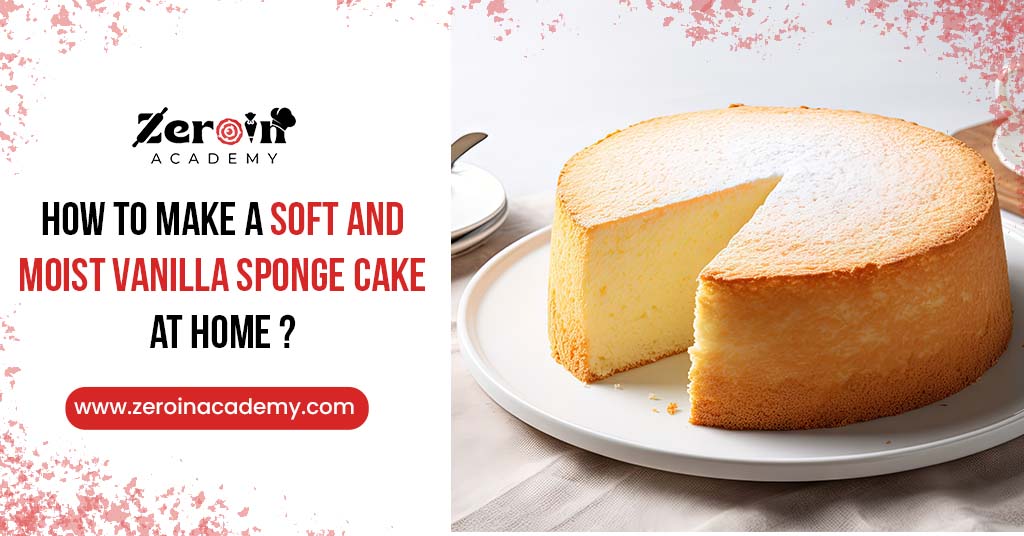
There is a particular kind of quiet confidence that comes from pulling a perfectly risen vanilla sponge out of the oven. No cracks, no dense centre, no disappointment. Just a cake that looks and smells exactly the way it was supposed to. Most home bakers have chased that feeling for longer than they would like to admit.
For anyone exploring baking courses in Chennai, the vanilla sponge is often the first real test, not because it is complicated but because it demands precision in the simplest things.
In this blog, we take a closer look at how to make a soft and moist vanilla sponge cake at home covering the science of the right ingredient ratios, why room temperature matters, how to cream butter and sugar correctly, what baking temperature does to texture, and how to avoid the most common mistakes that leave a sponge dry or sunken. Whether you are baking for the first time or trying to understand where your results have been falling short, this article walks through each stage with honest, practical guidance.
Why Does a Vanilla Sponge Fail Even When the Recipe Is Followed?
This is the question most home bakers carry but rarely ask aloud.
The recipe might say 180°C and 30 minutes. The ingredients might be measured. And still, the cake comes out dense or dry or disappointingly flat. The issue is rarely the recipe itself. It is almost always execution and execution depends on understanding, not just instruction.
A vanilla sponge is a study in balance. Fat, sugar, flour, eggs, and leavening all interact in ways that are affected by temperature, timing, and technique. When one element is off, the entire structure shifts.
What Role Do Ingredients Play in Getting the Texture Right?
In a vanilla sponge, every ingredient earns its place. Butter is no exception, it brings richness to the crumb while doing the quiet structural work of holding air during the creaming process. Sugar does not just sweeten, it holds moisture, which is what keeps a sponge soft for days. Eggs give the batter structure and lift. Flour, used in the right proportion, provides the crumb without weighing it down.
The question that shapes a baker’s understanding here is: what happens when these ingredients are cold?
Cold butter will not cream properly. Cold eggs can cause the batter to curdle, breaking the emulsion that holds the cake together. This is why room temperature ingredients matter, not as a suggestion, but as a structural requirement. Bringing everything to room temperature before starting builds the foundation for an even, airy batter.
How Does the Creaming Method Affect Softness?
Creaming butter and sugar is not simply mixing, it is aeration.
When butter and sugar are beaten together for the right amount of time, tiny air pockets form throughout the fat. These pockets expand in the oven and give the sponge its lift. Under-creaming produces a dense crumb. Over-creaming, especially in warmer climates, can cause the butter to become too soft and collapse.
A pale, fluffy, almost doubled mixture is the visual cue that creaming is done well. This stage alone can determine whether a sponge evolves into something light and tender or stays heavy and compact.
What Is the Right Way to Add Flour Without Losing Air?
Once eggs are incorporated, the batter is delicate.
Flour should be sifted and folded in gently not stirred, not beaten. Over-mixing at this stage develops gluten, which tightens the batter and produces a tough, chewy texture. A few visible streaks of flour before the final fold are not a problem. Losing the air that was carefully built during creaming is.
Alternating flour with milk or buttermilk also helps maintain the batter’s consistency without overworking it.
Does Baking Temperature Really Make That Much of a Difference?
It does and this is where many home ovens quietly betray their users.
A temperature that is too high sets the outer crust before the inside has had time to rise, causing cracks and a dense core. Too low, and the cake spreads without structure, absorbing excess moisture and turning soggy. Most vanilla sponges bake well between 170°C and 180°C in a preheated oven, with the rack positioned in the centre.
An oven thermometer is not an optional tool. It is one of the most honest investments a home baker can make.
How Do You Keep a Vanilla Sponge Moist After Baking?
The work does not end at the oven door. Overbaking by even five minutes can draw out the moisture that makes a sponge tender. A skewer test or gentle press in the centre is more reliable than a fixed timer. Once out of the oven, the cake should cool in the tin for about ten minutes before being turned out, this prevents it from breaking while the structure is still setting.
Wrapping a cooled sponge in cling film before frosting or storing it slows moisture loss significantly. A simple sugar syrup brushed on the layers before assembling also deepens the softness without altering the flavour.
From Doubt to Confidence: One Sponge at a Time
Most people who have struggled with a vanilla sponge have not failed at baking. They have simply not yet had the chance to understand what was happening inside the tin.
The shift from frustration to confidence in baking is rarely dramatic. It is gradual, shaped by small moments of clarity, by understanding why butter needs to be soft, why folding matters, why the oven temperature cannot be guessed. Each attempt builds something. Not just a cake, but a way of thinking about process, patience and attention.
Structured learning changes the way a baker thinks, not just what they produce. baking classes in Chennai Velachery at Zeroin Academy are built around exactly that practical, grounded training where the vanilla sponge becomes less of a recipe to follow and more of a technique to master.
Why does my vanilla sponge come out dense even when I follow the recipe?
A dense texture usually happens because of under-creaming, using cold ingredients, or over-mixing after adding flour. These factors affect the air structure needed to create a soft and light sponge.
Can I use oil instead of butter in a vanilla sponge?
Oil can create a softer and moister texture, but butter provides better flavour and helps with aeration. For a classic vanilla sponge, butter is preferred, while oil works well for certain moist cake styles.
Why does my sponge sink in the middle after baking?
A sunken centre can happen due to underbaking, excess leavening agents, or opening the oven door too early. Allow the cake to bake completely and set properly before checking.
How do you actually know when the cake is ready to come out of the oven?
Insert a skewer into the centre of the cake. It should come out clean without wet batter. A gentle spring back when you press the top of the cake is also a good indication that it is baked properly.
Does sifting flour really make a difference?
Yes. Sifting removes lumps and loosens the flour, making it easier to mix smoothly without losing the air created during the creaming process. This small step helps improve the final texture of the sponge.
How long does a vanilla sponge stay soft after baking?
A properly baked vanilla sponge can stay soft for two to three days when wrapped and stored at room temperature. For longer storage, freezing is better than refrigeration as it helps maintain moisture.