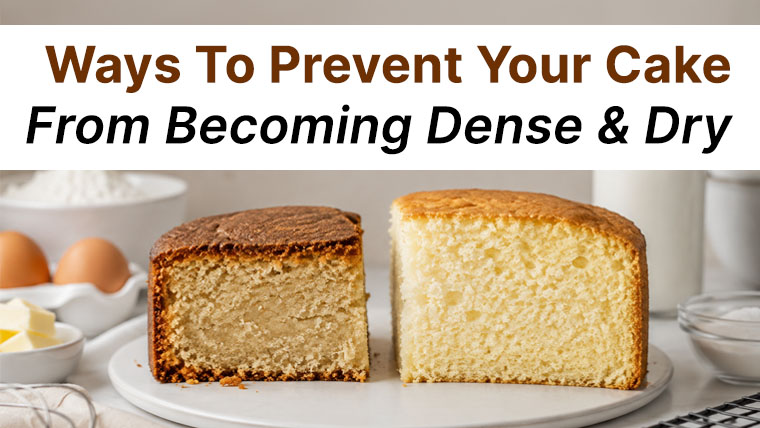
Measure Ingredients Accurately
One of the most common reasons cakes become dense or dry is incorrect ingredient measurement. Adding too much flour can make the batter thick and result in a heavy, dry cake. On the other hand, too much liquid can affect the cake’s structure and prevent it from rising properly.
For consistent results, use a kitchen weighing scale whenever possible. If you are using measuring cups, avoid scooping flour directly from the container. Instead, lightly spoon the flour into the measuring cup and level it with a knife. Accurate measurements help maintain the right balance between flour, fat, sugar, and liquid.
Avoid Overmixing the Batter
Once the flour is added to the wet ingredients, avoid mixing the batter for too long. Overmixing develops gluten, which can make the finished cake chewy, tough, or unnecessarily dense.
Mix the batter only until the dry ingredients are incorporated. A few small lumps are usually better than continuing to mix until the batter becomes completely smooth. This simple technique can make a noticeable difference in the final texture.
Check Your Leavening Agents
Baking powder and baking soda play an important role in helping cakes rise. If these ingredients are old or used in the wrong quantity, the cake may not rise properly and can become dense.
Always check the freshness of your leavening agents and follow the recipe measurements carefully. Using more baking powder does not necessarily make a cake lighter. Too much can affect the flavour, structure, and overall texture.
Do Not Overbake the Cake
Even a perfectly prepared cake can become dry if it stays in the oven for too long. Every oven behaves differently, so it is important to start checking the cake a few minutes before the recommended baking time is complete.
Insert a toothpick into the centre of the cake. If it comes out with a few moist crumbs, the cake is generally ready. Allowing the cake to bake well beyond this point can remove too much moisture.
For learners looking for training in a convenient Chennai location, Baking Classes in Anna Nagar can also provide an opportunity to develop practical baking skills while learning different cake, pastry, and dessert techniques.
Let the Cake Cool Properly
Cooling is another important step that should not be overlooked. Removing a cake from the oven and cutting it immediately can affect its structure and moisture distribution.
Allow the cake to rest in the pan for a short period before transferring it to a cooling rack. Once it has cooled completely, it can be filled, frosted, or brushed with syrup according to the recipe.
Build Better Baking Skills Through Practical Training
Understanding why a cake becomes dense or dry is just as important as knowing the recipe. Small details such as ingredient temperature, mixing technique, flour measurement, oven temperature, and baking time can significantly influence the final result.
If you want to understand these techniques through practical experience, joining Baking Classes in Chennai can help you develop a stronger foundation in cake preparation. Hands-on training allows you to practise different recipes, identify common baking mistakes, and understand how ingredient ratios and techniques affect the final product.
Whether you are a beginner or someone planning to improve your professional baking skills, learning the fundamentals correctly can help you consistently prepare cakes that are soft, moist, and perfectly textured.
Why does my cake become dense and dry?
A cake can become dense or dry due to too much flour, overmixing the batter, incorrect ingredient measurements, overbaking, or using ingredients at the wrong temperature. Following the recipe accurately can help prevent these problems.
How can I make my cake soft and fluffy?
Use accurate ingredient measurements, room-temperature ingredients, the correct amount of leavening agents, and avoid overmixing the batter. Ingredients such as cake flour and sour cream can also help create a softer texture.
Can simple syrup make a dry cake moist again?
Yes. Brushing a small amount of cooled simple syrup over a completely cooled cake can add moisture and improve its texture. Simple syrup is generally prepared using equal amounts of sugar and water.
Why is room-temperature butter important when baking a cake?
Room-temperature butter creams more effectively with sugar and helps create the desired cake structure. Butter that is too cold or too warm can affect the consistency of the batter and the final texture.
Can baking classes help me learn how to avoid dense cakes?
Yes. Practical training can help you understand ingredient measurements, mixing techniques, oven temperature, and baking time. Baking Classes in Chennai can provide hands-on experience with these essential techniques and help you improve your overall baking skills.