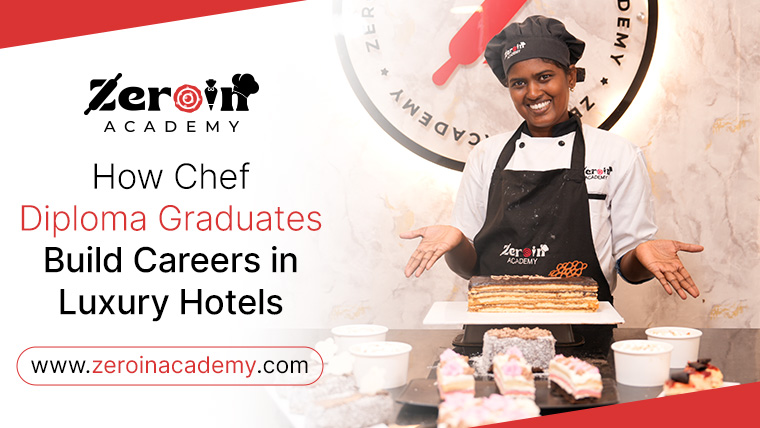
There is a particular kind of quiet that fills a professional kitchen an hour before service begins. Steel surfaces gleam under harsh light, stations sit prepped and waiting, and somewhere in that stillness, a young chef wonders if all those months of training actually prepared them for this. That moment of doubt visits almost everyone who has ever stepped from a classroom into a five-star kitchen. It is not a sign of failure. It is the beginning of transformation.
This blog looks closely at how chef diploma graduates actually build careers inside luxury hotels and what that journey really involves. It explains why formal training matters more than raw passion alone, how internships and practical exposure shape a graduate’s readiness for high-pressure kitchens, and why specialisation often decides how far someone goes in hospitality. It also addresses the soft skills that rarely get discussed in cooking classes, the realistic timeline for career growth and the mindset shift required to move from following recipes to leading a section. Along the way, it touches on why structured learning environments, such as those offering baking courses in Chennai, often give graduates a head start before they ever enter a five-star property. By the end, readers will understand not just the steps to a luxury hotel career, but the honest realities behind each one.
Why Formal Training Still Matters in an Industry Full of Self-Taught Cooks
It is tempting to believe that talent alone can carry someone into a luxury kitchen. Social media is full of self-taught cooks producing beautiful plates from home kitchens. But luxury hotels operate on systems, consistency, and volume that home cooking rarely demands.
A diploma does something subtle but important. It builds discipline around technique, hygiene, costing, and kitchen hierarchy long before a graduate ever faces a live service. This does not mean passion is irrelevant. It means passion needs structure to survive the pressure of a five-star kitchen.
The Gap Between Classroom Skills and Real Kitchen Pressure
Many diploma holders describe their first month in a hotel kitchen as disorienting. The knife skills are there. The recipes are memorised. What often catches them off guard is speed.
A hotel kitchen does not wait for anyone to catch up. Orders arrive in waves, not one at a time. This is where practical exposure becomes essential rather than optional. Culinary programs that build in real kitchen internships, staged under working chefs, help close this gap before it becomes a career-threatening shock.
How Specialisation Shapes Long-Term Career Growth
Not every chef ends up doing the same work. Some gravitate toward pastry, others toward continental cuisine, and a growing number find their calling in baking and confectionery, an area where technical precision matters as much as creativity.
This is often the point where structured baking education starts to matter. Institutions offering Baking Courses in Chennai have seen a steady rise in students transitioning specifically into hotel pastry sections, drawn by both the artistry and the stability the specialisation offers. Specialisation does not limit a career. It sharpens it.
Understanding Hotel Kitchen Hierarchy and Why Patience Pays Off
New graduates sometimes assume they will be creating signature dishes within months. The reality is more layered. Luxury hotel kitchens run on a brigade system, commis, demi chef, chef de partie, sous chef, and so on.
This hierarchy exists for a reason. Each level builds a different kind of expertise, from consistency to leadership to menu development. A graduate who understands this structure early tends to progress with far less frustration than one who expects immediate creative control.
The Soft Skills Nobody Mentions in Culinary School
Technical skill gets most of the attention, but luxury hospitality runs on something quieter: composure under pressure, respect within a team, and the ability to communicate clearly during chaos.
Guests never see what happens behind the pass, but they feel its results in every plate. A chef who has learned to stay calm during a fully booked banquet night often outperforms a technically brilliant cook who crumbles under stress. This is rarely taught directly. It evolves through repeated real-world exposure.
Building a Portfolio That Actually Reflects Growth
Career progression in luxury hotels is not just about time served. It is about documented growth, competitions entered, sections led, menus contributed to, certifications earned.
Graduates who track this evolution tend to move faster into supervisory roles. It creates a narrative recruiters and executive chefs can actually evaluate, rather than relying on vague claims of experience.
Where Structured Learning Fits Into the Bigger Picture
This is precisely the gap institutions like Zeroin Academy have tried to close, treating a diploma as something lived through rather than merely studied. Technical training is paired with genuine hospitality exposure from the start. It mirrors a larger change taking hold across culinary education, one that measures a graduate not by recipes memorised, but by how naturally they can move within a working kitchen’s pace from the very first day.
That quiet moment before service, the one filled with doubt, never fully disappears. Even experienced chefs feel it before a big event. What changes is the response to it. Training, exposure, specialisation and patience slowly replace panic with quiet confidence. For those beginning that journey today, especially in baking and pastry, exploring Baking Classes in Anna Nagar can be a grounded first step toward a career built on skill rather than guesswork.
Is a chef diploma needed for working in luxury hotels?
Yes. Most five-star hotels prefer candidates with formal culinary training, as it demonstrates professional knowledge, practical skills, and readiness to work in a commercial kitchen.
How long does it take to grow from Commis Chef to Chef de Partie?
For most professionals, progressing from Commis Chef to Chef de Partie takes around two to four years, depending on performance, experience, and the standards of the hotel or restaurant.
Is pastry a good specialisation for hotel careers?
Yes. Skilled pastry chefs are in high demand across luxury hotels, resorts, and premium restaurants, making pastry a rewarding and respected culinary specialisation.
Do internships really matter for placement?
Yes. Internships provide valuable real-world kitchen experience, helping students build confidence, improve practical skills, and strengthen their chances of securing employment.
What soft skill matters most in hotel kitchens?
The ability to stay calm under pressure is one of the most important soft skills. It helps maintain teamwork, efficiency, and quality during busy service hours.
Can someone switch specialisations after starting a career?
Yes. Many chefs transition into different specialisations during their careers, though it often requires additional training and gaining experience at a junior level in the new field.