There’s a moment that happens to almost every serious baking student, usually late at night, scrolling through photos of Michelin-starred pastry kitchens in Paris or artisan bakeries in Copenhagen. A quiet thought creeps in: could that ever be me? It feels distant, almost implausible, especially from a kitchen in Chennai where the ovens are different, the ingredients are different and the path forward isn’t always obvious. That thought isn’t naive. It’s actually the starting point for a very real, very achievable journey, one that begins right here, often in the same professional bakery courses in Chennai where fundamentals are first learned.
This blog explores what it genuinely takes for a baking student in Chennai to build a career in international bakeries, moving past the fantasy and into the practical reality. It covers why technical mastery matters more than talent alone, the role that global certifications and standardized techniques play in being taken seriously abroad, how exposure to international cuisines and ingredient philosophies shapes a baker’s versatility, the importance of understanding workplace culture and professional discipline in commercial kitchens and why soft skills like communication and adaptability often decide who thrives and who struggles once they’re actually there. It also addresses the honest question every student eventually asks: is this really possible without starting abroad from day one? The answer, as it turns out, has much more to do with preparation than geography. What follows breaks down exactly how that preparation builds, piece by piece.
Talent Gets You Noticed, Technique Gets You Hired
It’s a common misconception that creativity is what international bakeries look for first. In reality, most professional kitchens value consistency far more than flair. A pastry chef in Chennai might have incredible artistic instinct, but if their lamination technique is inconsistent or their temperature control is shaky, that instinct won’t matter. International kitchens run on precision. Learning to execute the same croissant, the same choux, the same tempered chocolate, exactly the same way, every single time, is what actually opens doors. Creativity comes later. Discipline comes first.
Why Global Certification Actually Matters
Many students wonder if a local diploma carries any weight internationally. The honest answer is that it depends heavily on the curriculum’s alignment with global standards. Programs that follow international baking and pastry frameworks, covering French, Italian and contemporary techniques alongside traditional Indian ones, tend to translate far more smoothly into international hiring conversations. It’s not about the paper itself. It’s about whether the training behind it actually matches what a kitchen abroad expects on day one.
Exposure to Global Cuisines Changes How You Think About Baking
There’s a noticeable shift that happens once a student starts working with ingredients and techniques outside their comfort zone. Working with European butter instead of local substitutes. Understanding Japanese pastry’s obsession with texture and lightness. Learning why German bread culture treats fermentation almost like a religion. This exposure doesn’t just add new recipes to a repertoire. It changes how a baker thinks about flavor, structure and balance altogether. Versatility, more than any single skill, is what makes someone employable across borders.
Understanding Kitchen Culture Before You’re In One
This is where many talented bakers stumble, not because of skill, but because of unfamiliarity with pace and hierarchy. International commercial kitchens, especially in cities like London, Dubai or Melbourne, run on strict discipline, tight timing, and clear chains of command. A student who has only baked at home or in a relaxed classroom setting can find this environment jarring at first. It takes real, repeated practice in a structured, professional style kitchen to internalize that rhythm before ever stepping into one abroad.
Soft Skills Decide Who Actually Thrives
Technical skill gets a baker in the door. Communication, adaptability, and the ability to take direction under pressure are what keep them there. International kitchens are often multicultural, multilingual spaces where misunderstandings can slow down entire service lines. Bakers who learn early to ask clarifying questions, adapt to feedback without taking it personally and stay calm under pressure tend to progress faster than those with more raw talent but less emotional steadiness.
The Role of Structured, Practical Training
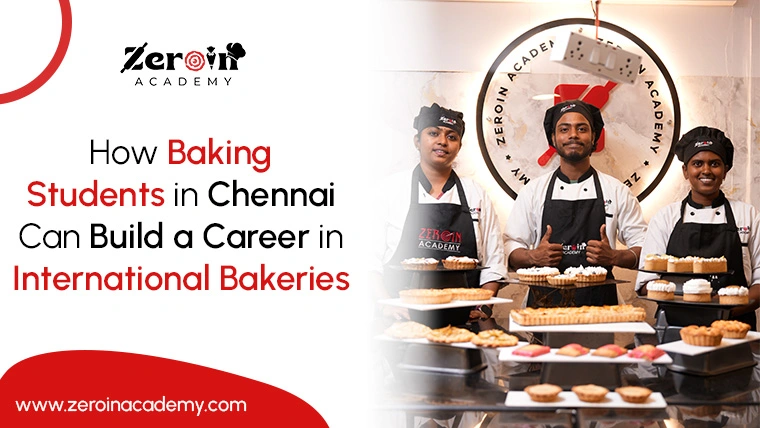
This is often where the gap between ambition and readiness closes. Reading about international techniques is one thing. Practicing them, under guidance, with real feedback and repetition, is another entirely. Structured programs like those at Zeroin Academy give students the chance to work through international modules hands-on, building the muscle memory and confidence that classroom theory alone can’t provide. It doesn’t guarantee a placement abroad. It builds the readiness that makes such placements realistic.
Starting Local Doesn’t Mean Staying Local
There’s a quiet fear among many students that beginning their training in Chennai somehow limits their ceiling. It doesn’t. Some of the most respected pastry chefs working internationally today began in modest, local kitchens with far fewer resources than what’s available now. What matters isn’t where the journey starts. It’s whether the fundamentals are built properly and whether the student stays committed to learning beyond just their local context.
Coming Back to That Late-Night Thought
That quiet question, could that ever be me, doesn’t have to stay a fantasy. It’s often the first honest sign that someone is ready to take their training seriously. A career in international bakeries isn’t built overnight and it certainly isn’t built by talent alone. It evolves through discipline, exposure and consistent, guided practice. For students in Chennai ready to start that evolution properly, cake baking classes in Velachery offer the kind of hands-on grounding where ambition slowly turns into genuine, exportable skill.
Do I need to study abroad to work in an international bakery?
No. Strong local training with exposure to global baking techniques matters far more than where you begin your learning journey.
Is creativity enough to get hired internationally?
No. While creativity is valuable, employers place greater importance on consistency, technical precision, and the ability to produce quality results every time.
Does a local baking diploma count internationally?
Yes, provided the program follows international baking techniques and industry standards rather than focusing only on regional recipes.
What’s the hardest adjustment when working abroad?
For many bakers, adapting to the fast-paced kitchen environment and structured hierarchy is more challenging than learning new recipes.
How important are soft skills in international kitchens?
They are extremely important. Strong communication, teamwork, professionalism, and the ability to stay calm under pressure are highly valued by employers.
Can structured training really prepare someone for global kitchens?
Yes. Hands-on training programs that replicate real kitchen discipline and teach international techniques can build the confidence and skills needed to succeed worldwide.