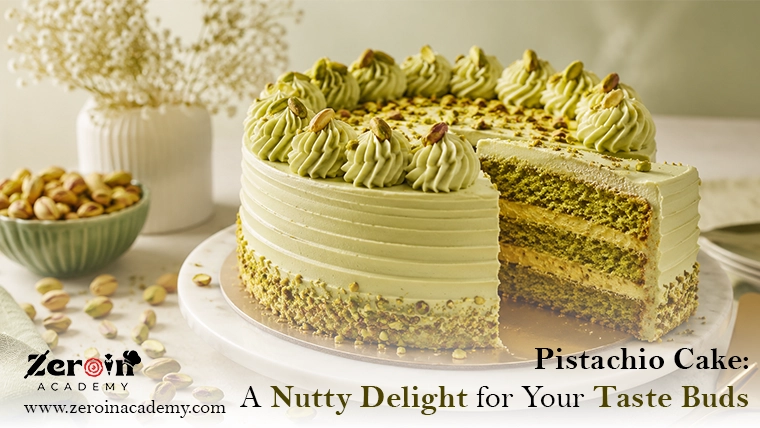
There’s something about pistachio cake that sets it apart from an ordinary bake. That rich, nutty depth pistachios bring, combined with a soft crumb that all but dissolves in your mouth, isn’t something you get from any other nut quite the same way. It suits a low-key afternoon tea just as easily as it does a celebration table, whether you leave it plain or dress it up with a good frosting. If you’ve ever wanted to actually make one like this at home, our cake baking classes in Chennai walk you through exactly this kind of bake, step by step, with real guidance rather than a recipe left to guesswork. The real appeal lies in that balance, the mild sweetness of pistachio sitting comfortably against the lightness of a well-made sponge.
A Quick Look at Where This Cake Comes From
Pistachios aren’t new by any means, they’ve been around for centuries, and for most of that history, they weren’t something ordinary people had easy access to. They were treated as a luxury, often reserved for royalty, before slowly making their way into everyday desserts across the Middle East and Mediterranean region. From there, they eventually crossed into Western baking too, which is how we ended up with the pistachio cakes people bake today, blending old-world flavor with more contemporary technique.
What Pistachios Bring to the Table Beyond Flavor
Pistachios do more than just taste good in a cake. They come loaded with genuine nutritional value, vitamin B6, potassium, and a decent amount of antioxidants. They’re also known to support heart health, mainly by helping bring down bad cholesterol and improving circulation. On top of that, the antioxidants and healthy fats found in pistachios are tied to better brain function, and two specific ones, lutein and zeaxanthin, help support eye health and keep skin looking healthy too. None of this turns pistachio cake into a health food, obviously, but it’s a decent bonus when your dessert happens to be doing more than just satisfying a sweet tooth.
Making Pistachio Cake at Home
Here’s a simple recipe that gets you a cake that’s moist, flavorful, and properly nutty without a lot of complication.
Ingredients
- 1 cup unsalted butter, softened
- 1½ cups granulated sugar
- 3 large eggs
- 2 cups all-purpose flour
- 1 cup shelled pistachios, finely ground
- 1 tsp baking powder
- ½ tsp baking soda
- ½ tsp salt
- 1 cup whole milk (or buttermilk, if you want extra tenderness)
- 1 tsp vanilla extract
- ½ tsp almond extract (optional, for a stronger nutty edge)
- Green food coloring (optional, just for looks)
Instructions
Start by preheating your oven to 350°F (175°C) and greasing your cake pan well so nothing sticks once it’s baked. Cream the butter and sugar together until the mixture turns light and fluffy, then beat in the eggs one at a time, adding the vanilla and almond extracts along the way. In a separate bowl, whisk together the flour, ground pistachios, baking powder, baking soda, and salt. Fold this dry mixture into the wet ingredients gradually, alternating with the milk, until the batter comes together evenly. Stir in the food coloring at this stage if you’re using it. Pour everything into your prepared pan and bake for 35 to 40 minutes, checking with a toothpick, it should come out clean once it’s done. Let the cake cool completely before adding frosting, whether that’s cream cheese frosting, buttercream, or just a light dusting of powdered sugar.
A Few Ways to Switch It Up
There’s plenty of room to experiment once you’ve got the base recipe down. A pistachio rose cake works in rose water and a scattering of dried rose petals, giving it a distinctly Middle Eastern character. Adding cocoa powder to the batter gives you a chocolate pistachio cake, and the chocolatey-nutty combination works better than you’d expect. Going vegan is straightforward too, swap in plant-based butter, almond milk, and flaxseed eggs, and the cake still holds up well. Baking it in a bundt pan instantly makes the presentation feel more special without any real extra effort, and turning the batter into cupcakes makes it easy to serve at parties or casual get-togethers.
At the end of the day, pistachio cake isn’t just another item on a dessert list. It’s that combination of nutty richness and a texture that genuinely melts away as you eat it. Whether it’s for a celebration or just something to go with your evening tea, it tends to stick in people’s memory. Give the recipe a try, experiment with whichever variation appeals to you, and let the pistachio flavor carry the rest.
If you’re based closer to Anna Nagar and would rather learn this in person than experiment alone in your kitchen, our baking classes Anna Nagar cover pistachio cake along with several other specialty bakes, all taught hands-on by experienced trainers. You’ll get proper guidance on getting the crumb right, working with nut-based flavors, and finishing techniques like frosting and presentation, so what you bring home isn’t just a recipe you followed, but a skill you’ve actually picked up.
Can I use store-bought ground pistachios instead of grinding them myself?
Yes, that’s completely fine and saves you a step. Just make sure they’re finely ground and unsalted, since chunkier or salted pistachios can affect both the texture and the overall flavor balance of the cake.
Why did my pistachio cake turn out dense instead of light and fluffy?
That usually happens when the batter gets overmixed after the flour is added, or when the butter and sugar aren’t creamed long enough at the start. Both steps play a big role in how light the crumb ends up.
Is the green color in pistachio cake natural?
Not really. On their own, pistachios give a fairly faint, muted green tone at best. The bright green you see in most bakery cakes usually comes from added food coloring, which is entirely optional to use.
What frosting pairs best with pistachio cake?
Cream cheese frosting is a common choice since its slight tang works well against the nuttiness, though a classic buttercream or even just powdered sugar dusted on top is a nice, lighter alternative.
Can I learn this kind of specialty baking at your Chennai classes?
Yes, working with nut-based flavors and flours, including pistachio, is part of what’s covered in our baking classes, taught hands-on with guidance from experienced bakers.