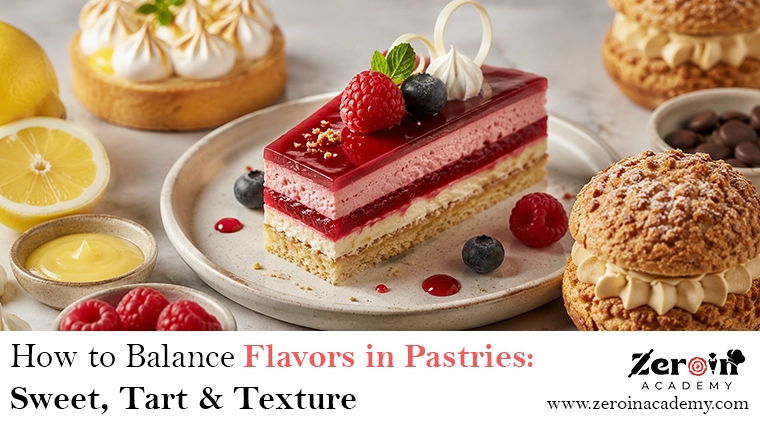
A pastry built on sugar alone rarely leaves much of an impression. What people actually remember is how the flavors and textures come together underneath a citrus éclair, a raspberry tart, a classic mille-feuille all work because every bite feels deliberate, not accidental. Nothing about a good pastry happens by chance.
Pastry keeps changing shape as global influences and newer methods make their way in, but the one thing that hasn’t shifted is how important it is to get sweetness, acidity, richness, and texture working together. For a lot of people who love baking, joining a baking classes in Chennai is really about finally understanding that balance through steady practice and guidance from people who’ve spent years figuring out what works.
Why Balance Actually Matters
Balance is what keeps a pastry from swinging too far in either direction, too plain, or too much all at once. Push the sugar too hard and the dessert loses its nuance. Push the acid too far and it quietly cancels out everything else on the plate. Texture matters here too, even though it’s easy to miss, the contrast between something crisp and something smooth, or something light and something rich, is often what makes a dessert feel genuinely satisfying rather than just sweet.
Most professional bakers start by taking a dessert apart piece by piece crust, filling, cream, garnish and adjusting each proportion so no single part dominates the rest. It was never really about chasing perfection. It’s about getting everything to sit together comfortably.
The Three Things Every Pastry Comes Down To
Sweetness carries most desserts, but it’s not just about taste, it shapes moisture and structure too, which is why it affects texture almost as much as flavor. A dessert that leans on sweetness alone tends to feel flat pretty quickly. A well-built pastry lets sweetness sit next to acidity, bitterness, salt, or spice instead of taking over the whole plate. A strawberry tart makes this obvious: the custard is where the sweetness lives, the fruit brings the freshness, and the crust adds the richness. Nothing on that plate is doing the same job twice.
Tartness is what keeps a dessert from feeling dense or repetitive. Lemon, passionfruit, raspberry, yuzu, these bring a natural sharpness that lifts a dish without overwhelming it. In pastry, that acidity usually shows up through curds, coulis, fermented ingredients, or fresh fruit, and it’s often the reason a bite feels light instead of heavy.
Texture is really what makes eating a pastry enjoyable in the first place. One texture from start to finish gets old fast, while contrast keeps you interested bite after bite. Flaky pastry, soft cream, crunchy praline, each one brings something different to the table. Even temperature plays into this; a warm filling against a cold cream can completely change how the flavors show up.
A Few Techniques Worth Knowing
Pairing opposites is one of the simplest ways to build balance into a dessert. Sweetness tones down acidity, bitterness adds character, and salt sharpens the whole thing. A dark chocolate mousse next to a tangy berry gel becomes far more interesting than either would be alone, the same way a lemon tart feels more grounded sitting on a buttery crust.
A good chunk of balance comes down to small, almost minor adjustments, cutting the sugar back a touch, adding a bit of citrus zest, a pinch of salt somewhere you wouldn’t expect it. Pastry work sits somewhere between precision and instinct, and the more you taste as you go, the more obvious it becomes how these elements actually affect each other.
Layering texture is another technique worth learning properly. A crisp shell wrapped around a soft filling creates contrast almost on its own. A nutty base under a smooth cream adds complexity without changing the underlying flavor much. Even small touches like toasted seeds or crumbled meringue can bring in a new textural layer without disrupting the taste.
What’s Working Quietly in the Background
Fat softens a dessert and carries flavor through it, giving pastries that rich mouthfeel people associate with something well made. Butter, cream, and nuts are the usual sources. When something starts to feel too heavy, a bit of citrus or spice is often enough to pull it back into balance.
Salt doesn’t get talked about much, but it’s constantly doing work behind the scenes. It sharpens flavor, keeps sweetness in check, and adds a layer of depth that’s easy to miss until it’s gone. In chocolate desserts especially, a small pinch of flaky salt deepens the flavor and keeps things from tasting one-note.
Bitterness, used with restraint, adds refinement rather than harshness. Dark chocolate, coffee, matcha, caramel, these give sweeter desserts more layers and give the palate a break from sugar for a moment. Learning when a dessert actually needs that kind of contrast is something that comes with time, practice, and feedback, which is exactly what hands-on classes are built to offer.
Flavor balance is really what turns an average dessert into one people remember. It comes down to bringing sweet, tart, and texture together with enough intention that nothing feels missing or overdone. Bakers who understand how these pieces interact end up with far more control over their own work, the ability to adjust, refine, and experiment with confidence instead of guesswork. Whether you’re baking at home for fun or working toward doing this professionally, structured learning makes that process a lot faster. Through our baking classes in Anna Nagar, with real-time feedback and genuine hands-on practice, students get guided toward pastries that feel refined, expressive, and genuinely balanced.
Do I need prior baking experience to understand flavor balancing?
Not really. Flavor balancing is something you develop through practice and tasting over time, so beginners can start learning it early, especially with real-time feedback in a class setting.
What’s the easiest way to start practicing flavor balance at home?
Start small, tweak the sugar in something you already bake often, add a bit of citrus zest, or a pinch of salt, and taste along the way to notice how each change shifts the flavor.
Why does texture matter as much as taste in a pastry?
Texture shapes how flavor is experienced while eating. Contrast between crisp and smooth, or light and rich, often makes a dessert feel more complete than taste alone ever could.
Can too much acidity ruin a dessert?
It can, if it’s not kept in check. Too much tartness tends to mute the other flavors in a dish, which is why acidic elements like citrus or fruit are usually added in careful proportion rather than as the main flavor.
Is this the kind of skill covered in your Anna Nagar baking classes?
Yes, balancing flavor and texture is a core part of what’s taught there, with hands-on practice and direct feedback so students can apply it confidently to their own pastry work.