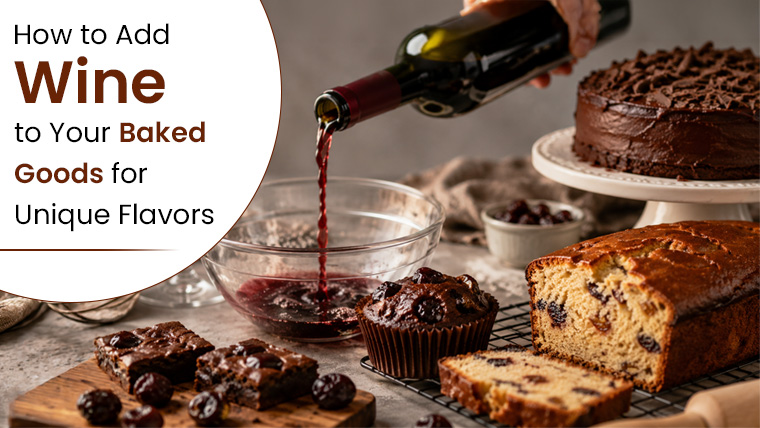
Baking sits somewhere between art and science get the combination of ingredients right, and something genuinely delightful comes out of the oven. Most of us default to vanilla, chocolate and fruit when we think about flavor and there’s nothing wrong with that. But wine brings something the usual suspects can’t quite replicate, a certain depth, a bit of sophistication, a flavor twist that pushes a simple dessert into gourmet territory. In this blog from our baking institute in Chennai, we’re getting into how to actually use wine in your baking, which wines work for which bakes and how to strike the right balance so the wine enhances rather than overwhelms.
What Wine Actually Does in Baking
Wine isn’t just there for flavor, though that’s the most obvious reason to reach for it. It brings a taste profile that can swing anywhere from fruity and sweet to bold and full-bodied, depending on what you pick. The alcohol itself plays a role too, it works into the dough and batter in a way that tenderizes it, leaving you with something lighter and more moist than you’d get otherwise. And the acidity in wine interacts with leavening agents, which often means a better rise and a noticeably improved texture in the finished bake.
Picking the Right Wine
The wine you choose shapes the entire flavor outcome, so this isn’t a step to rush through. Here’s roughly how to think about it.
Red wines carry rich, full-bodied flavors, which makes them a natural fit for denser, heartier bakes, think chocolate cakes, brownies, fruitcakes. Something like Cabernet Sauvignon, Merlot or Shiraz brings in notes of dark fruit, warm spice and occasionally even a faint chocolate undertone of its own.
White wines are lighter and more delicate, which suits cakes, cookies and pastries that aren’t meant to feel heavy. Chardonnay, Sauvignon Blanc and Riesling tend to work well here, adding citrus, apple or floral notes without overpowering anything.
Dessert wines Port, Sherry, Moscato are naturally sweet to begin with, so they pair easily with desserts. They show up well in cakes, tarts and glazes, where they add an extra layer of sweetness along with some genuine complexity.
Ways to Actually Get Wine Into Your Bake
There’s more than one way to bring wine into a recipe, and each one changes the outcome slightly. If you want to go deeper into this including some of the newer techniques bakers are experimenting with our baking classes cover this in a lot more hands-on detail. For now, here are the main approaches worth knowing.
A wine reduction is probably the most common technique. Simmer the wine over low heat until it reduces by about half and you’re left with something concentrated in flavor and mostly free of alcohol, ideal for folding into batters and doughs. It works particularly well in chocolate cakes and fruit compotes, where you want the wine’s presence without any raw sharpness.
Marinating fruit in wine before baking is another good option. Soak berries in a light white wine and you get a nice refreshing edge in a summer tart. Do the same with dried fruit in red wine and you end up with a noticeably deeper, more layered winter fruitcake.
Wine syrups and glazes are a good finishing touch rather than a baking-stage technique. Cook wine down with sugar until it thickens into a syrup, then drizzle it over cakes, muffins or pastries for both sweetness and a glossy, finished look.
Getting the Balance Right
This is really where most people either succeed or overdo it with wine baking. Too much, and the wine drowns out everything else. Too little and there was no real point adding it in the first place. A few things help:
Start with a small amount and build up gradually rather than guessing at the full quantity upfront. This way you stay in control of the intensity instead of correcting for it after the fact. It also helps to think about what pairs naturally with the wine you’ve chosen; chocolate leans well into red wine, while citrus and vanilla sit nicely alongside white wine. And always taste the batter before it goes into the oven, that’s your last real chance to adjust before the flavor is locked in.
Baking With Red Wine Specifically
Red wine has a way of turning an ordinary bake into something that feels a bit more considered. A chocolate and red wine cake is a good example, the wine deepens the chocolate flavor and adds a subtle fruitiness underneath it while also keeping the crumb moist and tender. Red wine brownies work on the same principle: the wine’s richness sits well against the chocolate, giving you a denser, more layered dessert without changing the basic recipe much at all.
A Few Practical Tips Before You Start
Use a wine you’d actually enjoy drinking, its quality carries directly into the final bake, so this isn’t the place to reach for whatever’s cheapest. Keep in mind that while most of the alcohol cooks off, a small amount can remain, so if you’re baking for children or anyone avoiding alcohol, a proper reduction is worth doing to bring that down further. It’s also worth experimenting across different wine varieties rather than sticking to one, each brings something slightly different and you’ll often find combinations you weren’t expecting. And because wine-infused bakes tend to hold extra moisture, they don’t keep quite as long as regular baked goods, so store them in an airtight container and try to finish them within a few days.
Wine in baking isn’t a gimmick, it’s a genuinely useful way to add complexity to desserts that might otherwise feel a little one-note. Whether you’re working with red, white or a dessert wine, the goal stays the same: balance it well and let it enhance what’s already there rather than take over. If you want to explore this properly, with guidance rather than trial and error, our baking classes in Chennai Velachery walk through these techniques in person. Next time you’re baking, try a splash of wine in the recipe, it’s a small change that tends to make a noticeable difference.
Does the alcohol in wine fully bake out of the dessert?
Most of it does, especially with longer bake times, but a small trace can remain. If the dessert is for children or anyone avoiding alcohol, using a wine reduction beforehand helps bring that residual amount down further.
Can I substitute cooking wine for regular drinking wine in a recipe?
It’s better to use a wine you’d actually drink, since its flavor and quality carry directly into the bake. Cooking wines are often lower quality and can leave an odd aftertaste in the final product.
Which wine works best for a beginner trying this for the first time?
If you’re just starting out, go with a light white wine like Riesling. It’s easy to work with and blends well into simple cakes or cookies without taking over the flavor.
How long can wine-infused baked goods be stored?
They tend to hold extra moisture, so they don’t last quite as long as regular bakes. Keep them in an airtight container and you’re looking at a few good days before quality starts to drop.
Is it possible to learn these techniques hands-on rather than just reading about them?
Definitely. Our baking classes walk you through wine-based techniques in person, from reductions to glazes to flavor pairing, so you’re actually practicing it rather than just guessing your way through it at home.