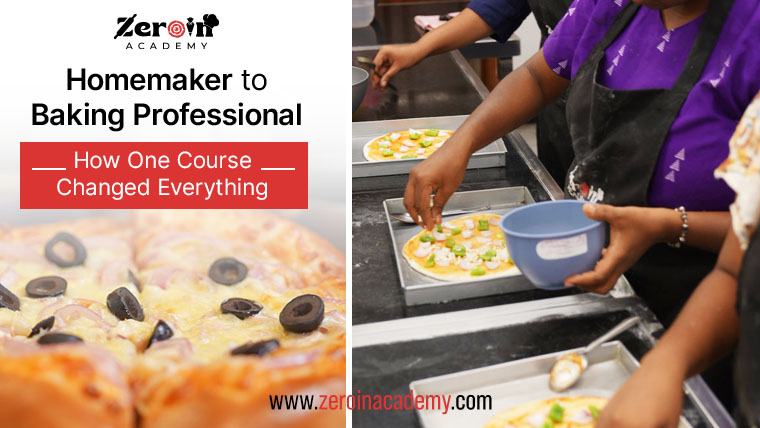
Many homemakers who bake well never plan to turn it into a business, it just happens. A cake for a birthday, sweets for a festival, and soon neighbours and friends are asking to place orders. What decides whether that stays a casual hobby or grows into real income usually isn’t talent; it’s structure. Homemakers who make this shift successfully tend to follow a similar arc: they start with a course that standardises technique and builds consistency, they pick up the business skills recipes alone don’t teach, things like costing, pricing, order management, and basic marketing, and they lean on practical factors like a nearby, well-scheduled course to actually stay consistent with training. Along the way, common hurdles such as time constraints, confidence, and the unglamorous business side tend to show up in predictable ways, and structured programs are built to address exactly these gaps. The sections below walk through each part of this journey in detail, from the early signs that you’re ready to take baking seriously, to what a good baking courses in Chennai actually changes, to the realistic path from home kitchen orders to a sustainable baking business.
The Homemaker’s Starting Point: Passion Without a Plan
Most homemakers who consider a baking course already know how to bake well. That’s rarely the problem. The gap is usually everything around the baking: pricing an order without guessing, managing repeat customers, keeping consistency across batches, and knowing when a hobby has grown large enough to need real structure. She may have years of informal practice but no formal reference point, no idea if her pricing covers her time, or how other home bakers in the city are running their kitchens as businesses. That uncertainty is usually what pushes someone from baking occasionally to looking seriously at structured training.
What Changes When You Take a Structured Baking Course
A good course does more than sharpen technique. It gives structure to something previously learned by trial and error. Training typically brings a few clear shifts:
- Recipes get standardised, so results are consistent every time, not just when things go well
- Techniques get corrected early, fixing small habits that limit quality without the baker realising it
- Time management improves, since a class schedule forces discipline that home practice often lacks
- Confidence builds through feedback, rather than guessing whether something turned out right
For many homemakers, this is the first time baking stops feeling like trial and error and starts feeling like a skill they can rely on.
The Business Skills a Course Adds Beyond Recipes
Recipes alone rarely turn a hobby into income. The business side is what most homemakers are missing, and what most self-taught bakers never get around to learning properly. Structured programs generally cover:
- Costing a bake accurately, including ingredients, time, and overheads
- Setting prices that are fair to the customer and sustainable for the baker
- Basic marketing through photos, social media, and word of mouth
- Handling custom orders and difficult requests without losing money or time
- Building a simple system for taking orders, tracking payments, and managing deliveries
Once these pieces are in place, baking starts to look less like a favour done for friends and more like a business with real numbers behind it.
A Realistic Path from Home Kitchen to Small Business
The shift from homemaker to baking professional rarely happens overnight, but it tends to follow a fairly predictable path. It usually starts with structured learning, where technique and consistency come first. Small paid orders follow soon after, often from friends, family, or neighbours willing to be early customers, and pricing mistakes tend to surface here, since undercharging is the most common early error. With guidance, pricing gets corrected and a basic system for orders takes shape, and from there, word of mouth begins doing the marketing on its own. Homemakers who complete this path with proper training tend to reach a sustainable order flow faster than those learning everything through guesswork, simply because they aren’t repeating the same expensive mistakes.
Common Challenges Homemakers Face and How Training Solves Them
A few challenges come up again and again. Time is often the biggest concern, since baking has to fit around family responsibilities rather than replace them, and flexible batch timings solve this for many. Confidence is another common hurdle, especially for someone who has never worked professionally before, and structured, hands-on classes with real feedback tend to rebuild it quickly. Many homemakers also underestimate how much support they need with the non-baking side of the business, which is exactly where a program with a dedicated business component makes the biggest difference.
Why Location and Timing Matter for Homemakers
For someone balancing a household and a new skill, a nearby, well-scheduled course matters as much as the course content itself. A long commute across the city can quietly discourage even a motivated homemaker from staying consistent, which is why programs offering multiple Chennai locations, such as Zeroin Academy’s branches in Velachery and Anna Nagar, tend to work better for busy homemakers than a single, hard-to-reach venue with fixed batch timings.
Signs You’re Ready to Turn Baking Into a Profession
Not every home baker needs formal training immediately, but a few signs usually suggest it’s time.
- Orders are coming in faster than pricing or systems can keep up with
- Family and friends are actively encouraging a shift toward selling
- There’s genuine curiosity about techniques beyond what home experimentation can teach
- Time feels available, or can be made available, for structured weekly learning
If most of these sound familiar, the jump from hobby baker to trained professional is usually smaller than it feels.
Closing Thoughts
The path from homemaker to baking professional rarely depends on natural talent alone. It depends on structure, consistent feedback, and a willingness to learn the business side alongside the craft. Institutes recognised for hands-on, certified training, like Zeroin Academy, are built around exactly this kind of transition, helping homemakers move from informal baking to confident, income-generating skill. For anyone based near the southern part of the city, checking baking classes in Chennai Velachery is a practical first step toward turning that transition into something structured and real.
Can a complete beginner homemaker join a professional baking course?
Yes. Most programs are designed to work with a range of starting skill levels, including homemakers with only informal baking experience.
How much time does a baking course usually require each week?
This varies by course length, but most programs run a few sessions a week, with weekday and weekend batches available for flexibility.
Do these courses actually teach how to price and sell baked goods?
Business-focused courses do, covering costing, pricing, and basic marketing alongside technique, which is usually the missing piece for home bakers.
Is it realistic to start earning soon after finishing a course?
Often, yes. Most homemakers don’t wait for a big break, they start with people already around them, family and friends happy to be first customers.
What if I only want to bake better for my own family, not sell anything?
That’s fine. Many students join purely to improve their skills at home, with no business intention at all.