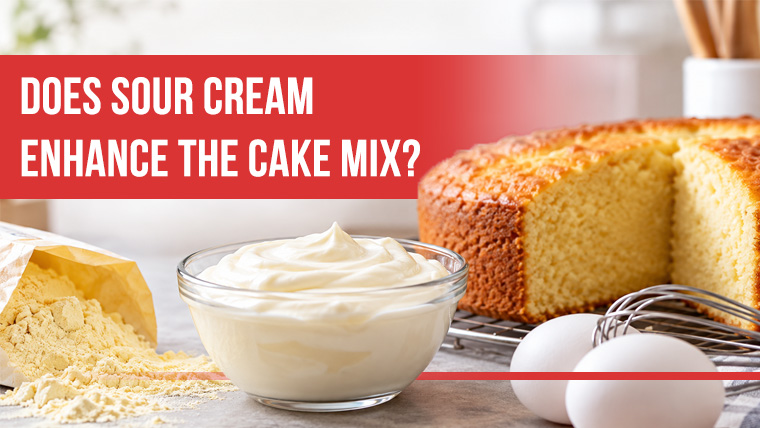
Honestly, what does it take to bake a cake? Flour, eggs, sugar, butter, that’s the bare minimum, and sure, it works. But anyone who’s baked more than a couple of times knows those four ingredients get you to “fine,” not “wow, what did you do differently this time.” That’s exactly why people keep tossing extras into their batter, chasing better texture, richer flavor, that kind of thing. And sour cream is one of those quiet little additions that keeps coming up in conversation. Does it actually do anything, though? Yeah, it genuinely does. A lot of bakery classes in Chennaihave students folding sour cream into their batter for exactly this reason, that little bit of extra richness and depth it brings.
If you’ve never really thought about what sour cream is, it’s just regular dairy cream that’s been deliberately soured using lactic acid. Crème fraîche is made almost the same way, and bakers use it for pretty similar reasons, that gentle tang, that extra layer of flavor. Sour cream itself is thinner than people expect and completely unsweetened, which is honestly why it slides into cake batter so easily without messing with the overall flavor. So let’s get into what it’s actually doing once it’s in there.
It Thickens the Batter, Weirdly Enough
The first thing you’ll notice is that sour cream thickens things up, which sounds backwards at first. We’re all used to hearing about thinning batters out, not the other way around. But a runny batter doesn’t hold together well once it’s baked, and nobody wants a cake that basically collapses the second you touch it. So if your batter’s too thin, or you just want a denser crumb, sour cream handles that nicely. And here’s the good part, it barely changes the flavor while it’s doing this, so you get that thickness without the cake suddenly tasting different. Some best baking classes actually teach students to swap out the oil or butter entirely and use sour cream instead, not just as an extra, but as the fat itself.
It’s Basically the Secret to That Golden Crust
There’s something really satisfying about a cake or a batch of cupcakes coming out with that perfect golden top. Getting there isn’t always simple though. Usually the outside browns way faster than the inside actually cooks, so you’re stuck waiting around, hoping the middle catches up before the crust goes too dark. Sour cream helps here too. Its acidity slows down browning just enough that the inside gets time to bake properly before the outside overdoes it. People assume dropping the oven temperature is the fix, and sure, it helps a bit, but what’s actually in your batter matters just as much. Add sour cream and you get that golden crust without the middle staying raw. It’s the kind of small detail solid baking courses actually spend time on, because it fixes a genuinely annoying problem.
It Helps Get Baking Soda Working
Here’s the more technical bit. Most cake recipes lean on baking powder or baking soda, sometimes both, to get that rise going. Baking soda needs something acidic to actually kick into action though. Sour cream fits that role really well, meaning it can stand in for baking powder in certain recipes while helping activate whatever soda’s already in the mix. As that reaction happens, the sourness in the cream gets neutralized, leaving you with a cake that’s got a nice tang and a noticeably fluffier texture.
Put it all together and it’s not hard to see why sour cream keeps showing up in cake recipes that are trying to do a bit more than the basics. It thickens where you need it, helps you nail that golden crust, and even does real work in how the cake rises. If you want to actually get your hands on these techniques instead of just reading about them, joining our Cake Baking Classes In Velachery is a good way to see these little tweaks make a real difference in your own baking.
1.Can yogurt work as a substitute for sour cream?
Pretty much, yeah. Plain yogurt has similar acidity and thickness, just a bit tangier. Greek yogurt especially swaps in well, one-to-one, in most recipes.
2.How much sour cream should actually go into a recipe?
Depends on what you’re baking, but a common move is swapping out about a quarter to half of the butter or oil for sour cream, or just stirring in a few tablespoons if the recipe doesn’t already call for it. Go too heavy and the batter gets overly dense, so ease into it.
3.Does it work in every kind of cake?
Not really every kind. It shines in richer, denser bakes, pound cakes, coffee cakes, vanilla or chocolate layer cakes. Lighter stuff like sponge or angel food cake doesn’t need it, since the extra thickness works against the airy texture those cakes are going for.
4.Will my cake end up tasting sour because of it?
Not really, no. The tang is subtle and mostly balances out once it’s baked, especially with baking soda neutralizing a good chunk of that acidity. Most people just notice a richer flavor, not a sour one.
5.Does sour cream work in cupcakes too, or just full cakes?
Works the same way in cupcakes, honestly. Helps with moisture, texture, and that nice browned top. A lot of bakers specifically add it to cupcakes because it keeps them moist for longer after baking, which is always a plus.