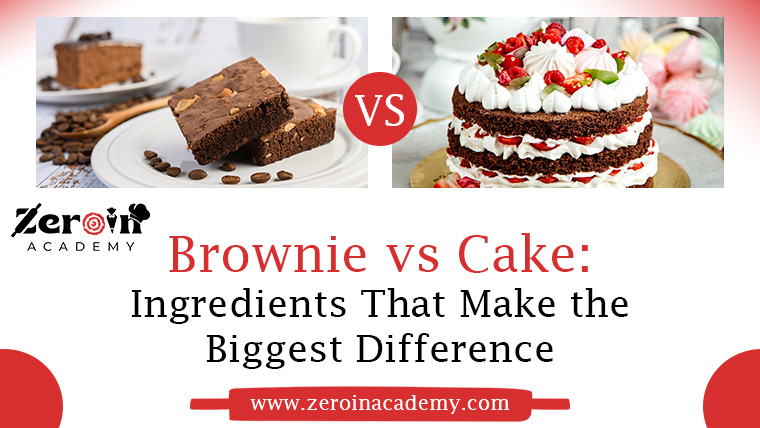
There’s a specific kind of disappointment every baker knows. The batter looked fine. The oven was preheated, timer set, everything by the book. And then the brownie comes out pale and cakey, nowhere near that dense, fudgy center you were hoping for. Or it goes the other way, a cake that was supposed to rise tall and light stays stubbornly flat, closer to a brick than anything worth celebrating. If you’ve stood in front of an oven wondering where it all went wrong, you’re not alone, and honestly, it usually has very little to do with effort. It comes down to ingredients.
Brownies and cakes share a mixing bowl and an oven, sure, but they’re built on almost opposite logic. The flour to fat ratio, how much leavening goes in, whether it’s butter or oil, even how suga behaves with eggs, all of it quietly decides whether you end up with something dense and chewy or soft and airy.
This blog gets into those difference, from fat and flour to sugar, eggs and leavening and why each one pulls texture in a different direction. Anyone building a real foundation in baking, say through professional baking classes in chennai, usually learns this early, because it’s less about following a recipe and more about understanding why the recipe works the way it does,
In this blog, we will take a closer look at what actually separates a brownie from a cake ingredient by ingredient.
The Flour Question: Why Less Is More in a Brownie
Flour gives structure. That part isn’t news to anyone. What’s less obvious is how much structure a bake actually needs and that’s where brownies and cakes start to diverge almost immediately.
Cakes use a fair amount of flour relative to fat and liquid, which builds a strong gluten and starch network. That network is exactly what gives cake its lift and that soft, springy crumb. Brownies use noticeably less flour. Less structure means less rise, and less rise is basically what keeps a brownie dense and close-textured instead of puffing up.
A lot of home bakers assume adding a bit more flour will just make the brownie “more cakey” in a good way. It doesn’t really work like that. It just pulls the bake further from what a brownie is meant to be in the first place.
The line between the two is thinner than people expect and it starts right here, with something as simple as a spoonful of flour.
Fat: Butter, Oil and the Texture They Create
This is really where things split. Cakes often rely on creamed butter, sometimes with a bit of oil added for moisture. Creaming isn’t just a step to check off, it traps air into the batter, and that air expands in the oven, which is a big part of why cakes come out light.
Brownies usually skip the creaming altogether and use melted butter or oil instead. Melted fat doesn’t trap air the same way, and that’s a large part of why brownies stay dense rather than fluffy.
Oil, especially, since it stays liquid at room temperature, is why some brownies still fel glossy and fudgy two days later, while a butter-heavy cake tends to firm up much faster. Fat is doing more work here than just flavor. It’s quietly shaping the entire texture before the batter even goes into the oven
Sugar: Not Just for Sweetness
It’s easy to think of sugar as purely a flavor thing, but its structural role matters just as much, maybe more. Brownies typically use a higher ratio of sugar to flour and that’s a big reason behind the shiny, crackly top so many people chase.
That crust forms when sugar partially dissolves into egg mixture and then sets as it bakes.
In cakes, sugar still adds moisture and tenderness, but it works with the flour and leavening rather than dominating the batter. The balance is more even, which supports a lighter, more uniform crumb instead of that fudge and crust contrast brownies are known for.
It’s one of those small details that’s easy to miss until someone points it out and then you can’t unsee it in every batch after.
Eggs: Binding, Lifting or Both
Eggs are doing double duty in most bakes. They bind things together and depending on how they’re handled, they also help with leavening.
Cake batters often beat eggs longer, sometimes separating whites from yolks, to work air into the mixture alongside baking powder or soda.
Brownies mostly use eggs for binding and richness, not lift. They’re not whipped nearly as much, because extra air isn’t really the goal. In fact, overbeating eggs in a brownie batter can quietly nudge the texture toward cake, which might explain why a brownie recipe that promises “extra fudgy” sometimes just doesn’t deliver.
Leavening Agents: The Real Line in the Sand
If there’s one ingredient that draws the sharpest line between the two, it’s leavening. Cakes depend on baking powder, baking soda or a combination of both to get that light, airy rise people expect. Skip it and a cake batter simply won’t behave like cake batter.
Brownies use very little chemical leavening, sometimes none at all. That’s intentional, not an oversight. It’s exactly why brownies stay flat and dense instead of rising into something taller and more open.
This is often one of the first real lessons taught in a proper kitchen setting, because once leavening clicks, it changes how you read every recipe after that, not just brownies and cakes.
Liquid and Moisture Balance
There’s a quieter factor too, moisture. Cakes usually include milk, buttermilk, or something similar to keep the crumb moist while still letting it rise the way it should. Brownies lean on fat and sugar for moisture instead, with little to no added liquid, which is part of why a good brownie feels almost underbaked in the center, in the best possible way.
There is a quieter factor too, moisture. Cakes usually include milk, buttermilk or something similar to keep the crumb moist while still letting it rise the way it should. Brownies lean on fat and suagr for moisture instead, with little to no added liquid, which is part of why a good brownie feels almost underbakes in the center in the best possible way.
This is where technique starts to matter as much as the ingredient list itself. Structured settings, like the ones offered through baking classes in Anna Nagar, tend to spend real time on this balance, because moisture control is honestly one of those things that separates someone who bakes decently from someone who actually understands how a formula behaves under heat.
Standing in front of that same oven now, it makes a lot more sense. A brownie was never meant to rise like a cake, and a cake was never meant to sit dense like a brownie. Both are shaped, quite literally, by the choices made before the batter ever touches the pan. Once you understand those choices, it’s not just about fixing one disappointing bake. It changes how you approach every one after it.
Why is my brownie coming out cakey instead of fudgy?
Usually too much flour or overbeaten eggs, both add air and structure a brownie doesn’t need.
Can I use the same batter ratio for brownies and cakes?
No, the flour-to-fat ratio and leavening amount work completely differently for each.
Does butter vs oil really change the texture that much?
Yes, oil stays liquid and keeps brownies fudgier for longer than butter-heavy bakes.
Why do brownies get that crackly top but cakes don’t?
That crust forms when sugar partially dissolves into egg, then sets while baking.
Do brownies need baking soda or powder at all?
Not really, brownies rely on minimal leavening to stay dense instead of rising.
What’s the biggest mistake when turning a cake recipe into brownies?
Keeping the same flour and leavening levels, which pushes the texture toward cake, not brownie.