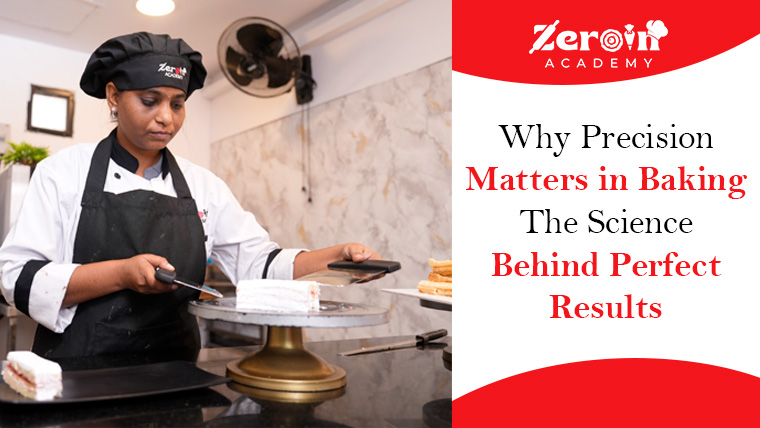
Two friends bake the same banana bread from the same recipe on the same afternoon. One loaf rises tall and golden, the other comes out dense and gummy. Nobody made an obvious mistake, yet the results are nothing alike. In baking, small differences in measurement, temperature and timing quietly decide the outcome, because every recipe is really a set of chemical reactions.
This blog explains the science behind that precision, covering measuring, temperature, mixing, oven behaviour and ingredient ratios, and why learners often turn to baking courses in Chennai to build habits that make results repeatable.
Every Ingredient Has a Job to Do
Cooking allows a pinch of this and a splash of that, but baking doesn’t. Once the batter goes into the oven, nothing can be adjusted, so every ingredient has a specific job that needs to be measured and balanced beforehand.
- Flour provides structure through gluten and starch
- Sugar adds sweetness, moisture retention and browning
- Fat tenderises and carries flavour
- Eggs bind, add richness and help the bake set
- Leavening agents create the rise
Change any one of these by a small amount and the others no longer balance.
Why Weighing Beats Measuring by Cups
Cups are convenient, but they are one of the biggest sources of inconsistency in home baking. The same cup can hold very different amounts depending on who fills it, and that gap quietly changes how a bake turns out.
- A cup of flour can weigh anywhere from 120g to 150g depending on how it’s scooped
- Packed versus loose sugar changes the quantity noticeably
- Digital scales give the same result every time, regardless of who is baking
- Weight-based recipes scale up or down far more reliably
That difference of a few grams can be enough to turn a soft cake into a dry one.
Temperature: The Quiet Variable
Temperature affects almost every stage, from mixing to baking, and it is often overlooked. Butter, eggs, dough and the oven itself all respond to heat differently, so small shifts can change the rise, texture and colour of the finished bake.
- Cold butter creams poorly, while overly warm butter makes cookies spread
- Room-temperature eggs blend more evenly into batter
- Oven temperature that runs hot or cold changes rise, colour and texture
- An oven thermometer often reveals that the dial setting is not the real temperature
This is especially relevant in Chennai’s warm climate, where kitchen temperature alone can change how dough and butter behave.
Humidity and Storage Ingredients Don’t Stay The Same
Even if the recipe is the same, the humidity of Chennai subtly changes how ingredients react. Moisture in the air affects flour, sugar and leavening agents, which is why a recipe that worked perfectly last month can suddenly feel off.
- Flour absorbs moisture from the air, so the same weight can need slightly less liquid on a humid day
- Sugar and salt clump when stored badly, which affects how evenly they blend
- Baking powder loses strength over time, especially once the tin has been opened for months
- Butter softens fast in a warm kitchen, so chilling it between steps helps
Storing dry ingredients in airtight containers and checking leavening agents occasionally prevents a lot of unexplained failures.
Mixing and Timing: Where Texture Is Decided
How long and how firmly ingredients are combined shapes the final crumb. Mixing decides how much air gets trapped and how much gluten develops, so even a minute too long or too short can change the texture noticeably.
- Overmixing cake batter develops gluten and makes it tough
- Undermixed batter leaves pockets of flour and uneven rise
- Creaming butter and sugar properly traps air that helps the cake rise
- Resting doughs gives gluten time to relax and flavours time to develop
Timers matter too. A few extra minutes in the oven can be the difference between moist and dry.
What Happens Inside the Oven
The oven is where the science becomes visible, and understanding it explains many common problems. Each stage of baking triggers a different reaction, and knowing the order helps a baker work out what went wrong and when.
- The leavening gasses expand raising the batter
- Proteins and starches firm, support structure of the bake
- Sugars caramelize and proteins brown, providing color and flavor
- Opening the door too early can make a rising cake collapse
Knowing what is happening at each stage helps a baker troubleshoot instead of just repeating a failed attempt.
Ratios and Substitutions That Go Wrong
Swapping ingredients seems harmless until the balance shifts. Every recipe is built on ratios between flour, fat, sugar, liquid and leavening, and changing one without adjusting the others is a common reason why substitutions fail.
- Replacing butter with oil changes texture and flavour
- Reducing sugar affects moisture and browning, not just sweetness
- Using baking soda in place of baking powder can leave a bitter, metallic taste
- Changing flour type alters how much liquid the batter needs
Learning the ratios behind recipes gives bakers the confidence to adjust them without ruining the result.
Turning Accuracy Into a Daily Habit
Precision isn’t about making baking stiff or joyless. It’s what lets a baker experiment with confidence, because they already know what each change will do to the crumb, the rise and the flavour. Getting there takes practice, and practice goes faster when someone is watching. Learners in the northern part of the city can join baking classes in Anna Nagar, where an instructor catches small slips in measuring, temperature or timing before they settle into habits.
Zeroin Academy has been teaching home bakers and aspiring professionals for nearly ten years, and its trainers keep returning to the fundamentals until precise measuring, temperature control and timing feel natural.
Why is weighing ingredients better than using cups?
Weight stays constant, while cup measurements vary with scooping and packing, making results inconsistent between bakes and between bakers.
Does oven temperature really affect baking results?
Yes. Many ovens run hotter or cooler than the dial shows, which changes rise, colour, texture and overall baking time.
What happens if cake batter is overmixed?
Overmixing develops gluten, which makes the cake dense and tough instead of soft, light and evenly crumbed.
Can I substitute baking soda for baking powder?
Not directly. They are not interchangeable and if proportions are not adjusted, can lead to a poor rise and a bitter aftertaste.
Do baking courses teach the science behind recipes?
Yes. Good courses explain why each ingredient and step is important, helping students troubleshoot problems and repeat results reliably.