Some skills solidly establish a baker, and chocolate tempering is one of them. Basically, it is the difference between a chocolate bar that glitters and breaks with a click, and one that dulls or melts quickly. A lot of beginners from different parts of Chennai like Anna Nagar, T Nagar, and Velachery excel in baking courses in Chennai to learn the right scientific way of handling chocolate rather than just through trial and error. As a core module, professional bakery training teaches tempering because mastering it is a reflection of the baker’s discipline, control, and genuine technique.
Tempering is definitely not just about melting chocolate. Essentially, it is about getting the correct cocoa butter crystals to give the chocolate a shiny, smooth, and hard finish. Chocolates that are not tempered properly are characterized by grey streaks or are soft and crumble easily. A well-designed diploma program guides the students through the stages of melting, cooling, and reheating chocolate with absolute accuracy, the skills being still applicable if they choose to work in pastry kitchens or have a home bakery business.
1. Seeding Method -Perfect for Beginners
This method slowly melts chocolate and then chills it with small pieces of chopped chocolate. The added pieces help to produce stable cocoa butter crystals, thus making the chocolate smooth, shiny and ready for moulding.
Best used for:
- Chocolate gift-boxes
- Chocolate bars
- Decorations for cakes
It provides beginners with control and helps them to develop an awareness of temperature, a very important skill for any kind of professional confectionery work.
Understanding Chocolate Better: A Look at Chip Varieties
Different chocolates rely on different tempers — dark becomes more firm, milk softens faster, and white heats up more quickly. Each one has its own fat content and melting behaviour, which, of course, has an immediate effect on the speed and result of tempering.
A baker who has knowledge of the different kinds of chocolate will know when it is necessary to increase the caution, when to slow the cooling and how to balance the sweetness with the stability. Moreover, you can find out how different chips work in real recipes by reading this related blog: “Exploring Chocolate Chip Varieties: Dark, White, & More“.
Learning chocolate is not only a matter of technique but also a matter of understanding.
2. Tabling Method- Traditional, Fast & Visual
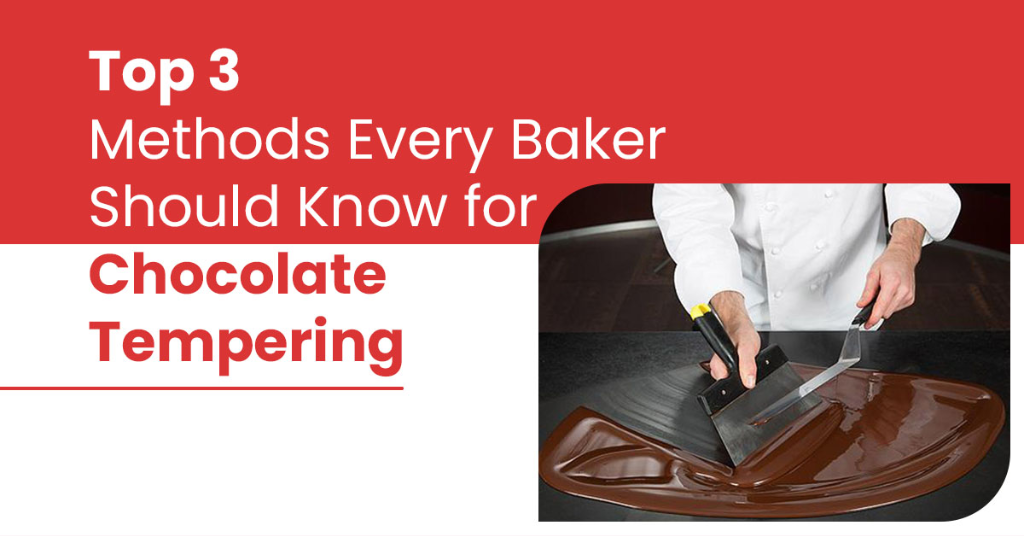
Chocolate that is still warm is taken from the pot and poured over a marble surface. It is then spread and mixed continuously until it cools down, gets thicker and becomes stable. The whole process is done with the operator’s hands, requires his quick decision-making and he visually determines the gloss and the thickness of the chocolate.
How professionals benefit from it:
By doing this regularly, professionals get the skill to judge by their senses. Pupils learn to recognise the readiness of chocolate by looking at it, rather than just measuring it. This method is widely used in small artisan kitchens where it is done frequently and quickly.
A Perfect Pairing: Frosting That Enhances Tempered Chocolate
Tempered chocolate is visually appealing and tastes the best when it is used with the textures that are its perfect match – for example, a rich and smooth frosting, a fudgy type of filling, or a silky kind of layer. Knowing the composition of the frosting allows the bakers to make a difference of contrast rather than competition.
In case you want to know more about the ingredients of a frosting that would make a perfect balance with tempered chocolate, have a look at the linked read: Chocolate Fudge Frosting -Ingredients You Should Know
It goes further into flavor knowledge, thus helping the bakers to create desserts that do not look like they are just coated, but rather are complete.
3. Microwave Tempering
Small bursts of heat and stirring frequently can temper small batches very fast. It’s a great technique for home baking, small production and quick garnish work.It helps understanding the process by intuition, recognising shine, flow and viscosity by eyes, not just by a thermometer.
Tempering seems to be complicated, but with practice, help and repetition, it becomes instinct. Zeroin Academy guides beginners to become comfortable with chocolate and as a result, shine, snap and texture are getting natural. If you are willing to dive into chocolate seriously and develop your skills, cake baking classes in Anna Nagar with Zeroin can be your way of mastering the craft.