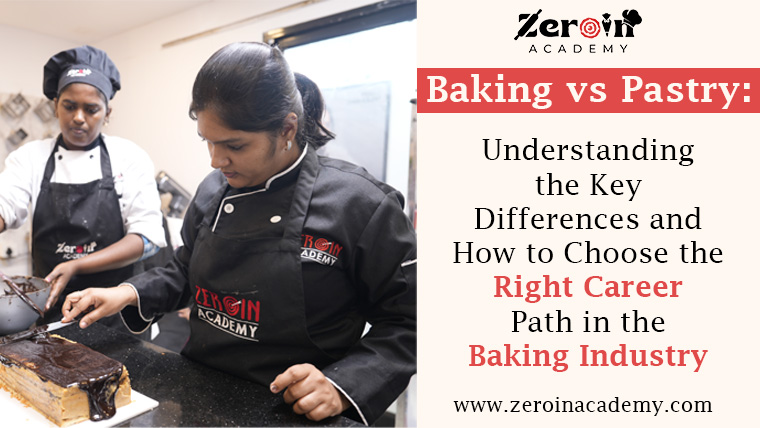
A fresh culinary student stands in a kitchen at 4 a.m., hands deep in dough, while a classmate across the room pipes delicate rosettes onto a tart with a steady hand. Both are called bakers by their families, yet their days, skills and temperaments look very different. Many beginners use “baking” and “pastry” as one word, then find out halfway through a course that they are two distinct crafts.
This article explains how the two differ in techniques, ingredients, daily routines, training and career options, and offers a simple way to decide which one fits you. If you are comparing baking courses in Chennai, it will help you pick a course with a clear direction.
Where the Two Crafts Overlap and Where They Part
Both baking and pastry use flour, fat, sugar, eggs and an oven. Both reward precision, and both depend on understanding how ingredients behave. That shared base is why the two are often taught together.
The split shows up in the end product. Baking usually refers to breads, rolls, buns, savoury items and many everyday cakes and cookies. Pastry focuses on delicate, refined items such as tarts, croissants, éclairs, mousses, entremets and plated desserts. Put simply, baking leans toward structure and fermentation, while pastry leans toward finesse, flavour layering and presentation.
What a Baker Does Day to Day
Bakers work with dough, and dough is alive. Yeast ferments, gluten develops and timing decides the outcome. A baker spends the day mixing, kneading, proofing, shaping and baking loaves, buns and rolls, and managing fermentation, including sourdough starters and overnight doughs. Production often happens in volume during the early hours, so fresh bread is ready by morning. Controlling oven temperature, steam and crust development is part of the job, as is maintaining consistency across hundreds of identical items, along with handling stock, cleaning and equipment.
The work is physical, early and repetitive in the best sense. Satisfaction comes from rhythm, from reading dough by touch and from seeing a rack of loaves come out right.
What a Pastry Chef Does Day to Day
Pastry work is quieter and more detailed. It rewards patience and a steady hand. A pastry chef prepares doughs such as shortcrust, puff, choux and laminated pastry, and makes creams, custards, ganaches, mousses and glazes. Cakes, tarts and individual desserts are assembled and decorated, often with chocolate, sugar and fruit, which calls for skills like tempering and caramel work. Desserts are plated for restaurants, hotels and events, and new flavours and seasonal menus are developed along the way.
Hours can still be long, especially before events, but the pace is more precise than physical. Satisfaction comes from the finished look and taste of a dessert that took many careful steps.
Skills, Tools and Temperament Compared
The differences are easiest to see side by side.
A baker needs a feel for fermentation, stamina for early starts and comfort with large batches. Typical tools include mixers, proofers, deck ovens, bannetons and lames. A pastry chef needs fine motor control, an eye for design and patience for multi-stage recipes. Typical tools include piping bags, tart rings, moulds, offset spatulas, thermometers and sheeters.
Temperament matters. People who enjoy rhythm, routine and working with their hands in a fast-moving production setting often lean toward baking. People who enjoy detail, creativity and polished presentation often lean toward pastry. Many people discover their preference only after trying both.
Training Paths for Each Direction
A good programme begins with shared fundamentals and then lets learners go deeper.
For bakery, look for modules on yeast doughs, sourdough, enriched breads, laminated doughs and production planning. For pastry, look for tarts, choux, creams, mousses, chocolate work, sugar work and plated dessert design. Both paths benefit from lessons in hygiene, food safety, costing and menu planning, since these matter in every kitchen.
Ask how much time is spent at the counter compared with the whiteboard, how large the batches are and whether students get their own station. Certificates help, but practical confidence is what employers notice.
If possible, spend a day observing a class or a working kitchen before enrolling. Watching how instructors correct mistakes, and how students handle the pace, tells you more about a course than its brochure.
Career Options in Each Path
Neither path is a shortcut, and early years are usually demanding, but both lead to a range of roles.
For bakers, options include artisan bakeries, hotel and restaurant bread sections, commercial production units, café kitchens and starting a small bread brand. For pastry chefs, options include patisseries, hotel pastry kitchens, fine-dining dessert sections, cake studios, event dessert work and chocolate or confectionery businesses. Both can work in cloud kitchens, teach workshops, create content or develop recipes for food companies.
Income, Hours and Lifestyle Realities
Pay at the start is usually modest in both. Over time, pastry roles in hotels and fine-dining kitchens can pay more, while a successful bakery owner can earn well once the business is steady. Hours differ: bakers often start before dawn and finish by afternoon, while pastry chefs may work later hours and extra days around events and festivals.
Be honest about the lifestyle. Kitchens are hot, shifts are long and holidays are the busiest times. If you enjoy the work, those costs feel worthwhile. If not, it is better to know early.
Plan finances for the early years. Many beginners take an entry-level role, build speed and a reputation, and only then move toward specialisation, higher pay or a business of their own.
Choosing With Confidence
A few questions can point you in a direction. Ask yourself whether you prefer working with dough by touch or building desserts layer by layer, and whether you are comfortable with early mornings or would rather work later shifts. Think about whether you enjoy production and rhythm or detail and design, and whether you want to run a bakery, a dessert studio or a mixed café. It also helps to notice if you are more drawn to savoury, everyday foods or to celebration items, since your answers usually lean clearly toward one path.
If you are still unsure, take a short course that covers both. Spending a few weeks making bread and a few weeks making tarts and mousses usually makes the answer obvious. Zeroin Academy has spent close to a decade training home bakers and aspiring professionals through hands-on programmes, with trained instructors guiding students from basic doughs and sponges to advanced desserts and finishing.
Baking and pastry are two sides of the same craft, and neither is better than the other. The right one is the one that matches your temperament, your goals and the kind of kitchen you want to work in. Try both, ask questions and let practice guide the decision. Whichever direction you pick, the first year is about building habits, so stay curious, accept corrections gracefully and keep a notebook of what works. For learners in the north of the city who want guided, hands-on practice close to home, joining baking classes in Anna Nagar is a practical way to begin.
What is the main difference between baking and pastry?
Baking focuses on breads, rolls and everyday cakes, with an emphasis on structure and fermentation. Pastry covers tarts, mousses and plated desserts, with more focus on finesse and presentation.
Which is easier for a beginner, baking or pastry?
Neither is easier overall. Baking suits people who like working with dough by touch, while pastry suits those who enjoy detail and multi-step recipes. A course covering both helps you decide.
Do bakers and pastry chefs earn differently?
Pay is modest for both at the start. Over time, hotel and fine-dining pastry roles can pay more, while a successful bakery owner can also earn well once the business is steady.
Can I switch from baking to pastry later?
Yes. Many people begin in one path and move across. A baker who learns laminated doughs drifts toward pastry, and a pastry cook who learns sourdough adds bread.
Should I choose a course that teaches both?
If you are unsure, yes. A few weeks of bread and a few weeks of tarts and mousses usually makes your preference clear before you specialise.