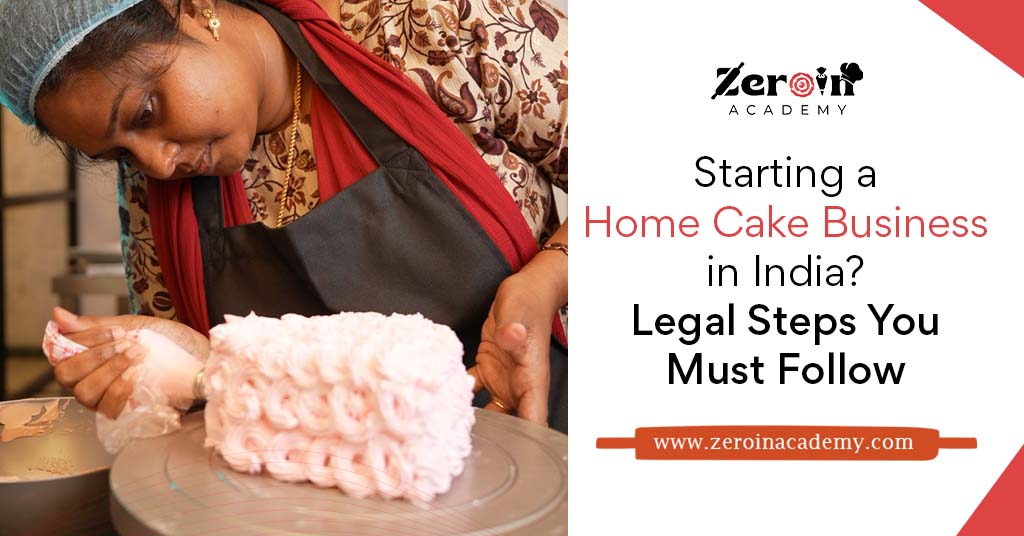
There’s a moment every serious home baker recognises. The orders are coming in steadily. Friends are tagging you on Instagram. Someone you’ve never met is asking if you deliver. And somewhere between the flour-dusted counter and the late-night frosting sessions, a quiet realisation surfaces, this is no longer just a hobby.
That moment is beautiful. It’s also a little terrifying.
Here at Zeroin Academy, where we’ve been teaching Baking Courses in Chennai for over nine years, we’ve watched hundreds of passionate bakers arrive at exactly this crossroads. The craft is ready. The dream is clear. But the paperwork? That part feels like a different language entirely.
So before you design your logo or print your cake boxes, let’s talk about the legal foundation your home cake business actually needs. Not to overwhelm you. But because protecting your dream is part of building it.
Why Legality Isn’t the Boring Part, It’s the Brave Part
Running an unregistered home bakery feels harmless at first. Small orders, trusted customers, a WhatsApp catalogue. But as your business evolves, the gap between informal and illegal quietly narrows. A single complaint to the food authority, one customer dispute, or a tax audit can unravel years of effort.
Registering your business isn’t bureaucracy for its own sake. It’s the act of saying, I take this seriously.
Step One: Choose Your Business Structure
Your first legal decision shapes everything that follows. Most home bakers start as a Sole Proprietorship. And honestly, it makes sense. It’s the simplest route, no complicated paperwork, no separate legal entity to maintain. In this structure, you are the business. The business is you.
There’s no formal central registration that kicks it into existence. But the world still needs proof that it exists. A bank account in your business name. A GST number. A Shop and Establishment licence. These are the documents that tell banks, clients, and authorities yes, this is real, this is legitimate, this person means business.
If you plan to grow, bring in a co-founder, or separate personal and business liability, a Private Limited Company or an LLP (Limited Liability Partnership) builds a stronger foundation though both require more documentation and compliance.
Start simple. But know where you want to go.
Step Two: FSSAI Licence – Non-Negotiable
This is the single most important legal requirement for any food business in India.
The Food Safety and Standards Authority of India (FSSAI) regulates everything edible that enters the market. As a home baker, you need either a Basic FSSAI Registration (for annual turnover below ₹12 lakhs) or a State FSSAI Licence (for turnover between ₹12 lakhs and ₹20 crore).
The application is made online through the FoSCoS portal. You’ll need your Aadhaar, a passport photo, proof of business address, and a list of products. The process takes between 30 to 60 days.
Once approved, your FSSAI number must be printed on every product label you send out. Every single one.
Step Three: GST Registration
Here’s the number most home bakers don’t think about until it sneaks up on them ₹20 lakhs.
The moment your annual turnover crosses that mark, GST registration stops being optional. It becomes the law. In some northeastern states, that threshold sits lower, at ₹10 lakhs, so geography matters more than most people realise. Below that threshold, it remains optional but registering voluntarily has real advantages, especially if you’re supplying to corporates or event planners who need GST invoices.
GST for baked goods typically falls under 5% or 12% depending on whether the product is branded and packaged. A tax consultant familiar with food businesses can clarify exactly what applies to your product range
Step Four: Shop and Establishment Act Registration
Even when you bake from home, most states require businesses operating from a residential address to register under the local Shop and Establishment Act. This is managed at the state level in Tamil Nadu, it falls under the Labour Department.
Registration is straightforward. It gives your business a recognised operating address and is often required when opening a current account or applying for any government scheme.
Step Five: Trademark Your Brand Name
You’ve built something. A name. An identity. Maybe it’s a logo you sketched at midnight. Maybe it’s just the way your name looks on a box, or a colour people have started associating with your cakes.
That recognition took time to build.
Don’t hand it over for free. Trademark registration through the Controller General of Patents, Designs & Trade Marks (CGPDTM) puts your name on record legally, officially, and permanently yours. It prevents others from copying what you’ve built, and it makes your business more valuable if you ever decide to scale, franchise, or sell.
This step feels premature when you’re just starting. Do it anyway.
Step Six: Labelling Compliance
Every packaged product you sell must comply with FSSAI’s labelling guidelines. This includes the product name, ingredient list, net weight, manufacturing date, best-before date, your FSSAI number, and allergen declarations.
These aren’t optional design choices. They are legal requirements, and they build trust with every customer who reads your label.
The Foundation Under the Frosting
Your cake business is built on two things: skill and trust. The legal framework you put in place protects both. It tells your customers you are safe, accountable, and real. It tells regulators you operate with integrity. And it tells you on the hard days that what you’ve built is worth protecting.
At Zeroin Academy, we believe that real business confidence comes from knowing your craft deeply and running it wisely. That’s why our 6 Months International Diploma in Baking and Patisserie goes beyond recipes and techniques, it shapes the mindset of a professional who is ready for every dimension of this industry
That feeling you had the one where you realised this was more than a hobby deserves more than beautiful cakes. It deserves a business that can last.
If you’re in Chennai and ready to take the next step, come talk to us. Whether you’re just beginning or already baking for clients, our baking classes in Anna Nagar are designed to meet you exactly where you are and take you somewhere further than you imagined.