The culinary world today is a very specialized one where people with only one skill are greatly rewarded. A solid understanding of the technique is no longer considered an option; rather, it characterizes how far one will go in their career. A baking institute in Chennai can be a great option for those aspiring bakers in Anna Nagar, Mogappair, and nearby localities who want to go for a systematic training so that they can master the traditional pastry skills.
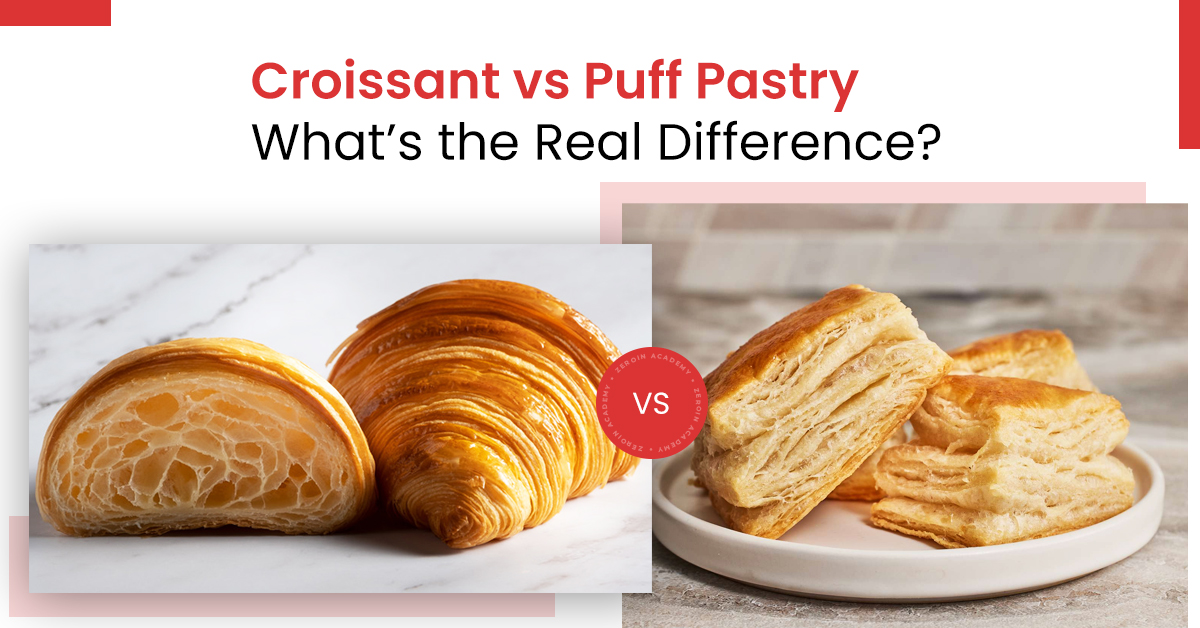
One of the essential things that every serious baker needs to recognise is the difference between croissant dough and puff pastry. On the face of it, they may both look like they have layers, but the way they are made, the texture, and the usage are very different.
Knowing the difference goes far beyond mere theoretical knowledge. It will impact the quality of the product, its uniformity, and thus the baker’s professionalism and credibility.
Understanding Puff Pastry
Puff pastry is an example of laminated dough from multiple layers of butter and the dough being rolled together to form these thin stacks of dough layers (and butter layers). Since puff pastry doesn’t include any yeast in its formulation, the extreme rise/puff of the finished product comes from the steam developed from the baking process.
Some of the main features/characteristics of puff pastry include:
- No yeast used for rising from fermentation.
- A crisp, flaky mouth feel.
- The absence of many flavours. Puff pastry is generally considered to have a neutral flavour.
- Can be made into sweet or savory products.
When puff pastry is baked properly, it results in several hundred very thin layers stacking/stacked on one another. It is necessary to accurately manage the folding as well as maintain proper temperatures, or mishandling (even slightly) could lead to butter leaking out or uneven lift during baking.
What Makes Croissant Dough Different?
A croissant dough is a laminated dough, just like a puff pastry; however, it ferments (uses yeast) unlike a puff pastry. The fermentation of a croissant dough provides the dough with a softer inner crumb and a little bit of chewiness, along with a flaky outer casing.
Croissant dough has specific characteristics:
- Fermented and yeast-based
- Buttery flavour, but has some elasticity
- Requires proofing before being baked
- Flaky exterior, but bread-like texture on the inside
The fermentation period will require time and a good understanding of how environments affect the fermentation process (such as temperature, resting time, and butter texture) in order to ensure the final product is successful. This is why we see such a large difference in results between those who have had a formal education in baking and those who haven’t.
Why This Difference Matters for Culinary Careers
Knowing the differences between these two types of dough increases your technical credibility. Employers and clients expect bakers to not only be able to follow a recipe but also understand why certain techniques are used. Learning to laminate dough is a great way of practicing control, patience, and attention to detail, the kind of qualities that are appreciated in professional kitchens.
Students get to know the basics of dough, lamination, and production workflow in the master the art of baking and basic pastry class. They discover how the changes in proportion of the ingredients, accuracy of the folds, and length of the dough resting can influence the texture and the volume. They comprehend the scientific principles of the products instead of merely duplicating them.
For those of you who wish to significantly enhance their pastry skills, check out this comprehensive guide on perfecting pastry crust techniques like a professional baker
Skill Development Through Structured Training
Croissants and puff pastries require repetition and oversight. Baking classes offer:
- Hands-on lamination practice;
- Correcting folding technique immediately;
- Managing temperature; and
- Observing the workflow of a professional kitchen.
These experiences help to prepare students for the real kitchen environment where precision is critical.
Building a Future in Pastry Arts
The future of culinary careers is a space for creative minds backed by technical skills. A traditional pastry method like lamination is still a base for bakeries, cafs, and hotels of today. Understanding the distinction between croissant and puff pastry is a step that gives students assurance in working with complicated dough systems.
Through apprenticeship, a person gets to move from seeing these techniques as a challenge to being able to use them as second nature.
At a glance, croissant and puff pastry may look the same, but the way they are made, their fermentation, and their texture at the end demonstrate completely different paths that an apprentice baker cannot do without. Knowing these differences not only deepens your technical abilities but also makes you more prepared for your career. Students get the opportunity to learn under supervision, do exercises in a systematic way, and receive feedback instantly from the teacher through which they acquire working professionally confidence. If you are really committed to your pastry basics, cake baking classes in Anna Nagar at Zeroin Academy would be your perfect choice where you can grow not only your culinary skills but also your precision and discipline for the long term.